
“the sunflowers themselves far more wonderful than any words about them.”
― Mary Oliver, Upstream: Selected Essays
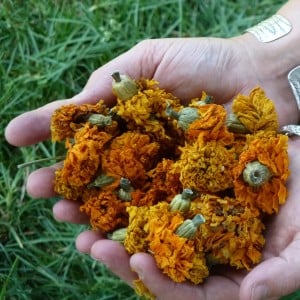
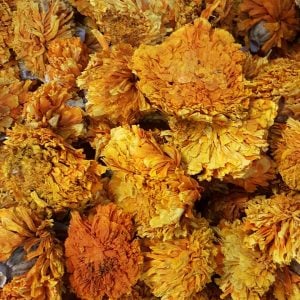
Spring is coming so now is the chance to grow a few pots of your own color: dye flowers or indigo, or perhaps plant out some madder root for future harvest. Growing dye plants from seed is very rewarding, and you may have enough starts to share with your friends and community. There is a magic to walking outside and checking to see how the dye plants are doing. A few minutes inspecting, watering and talking to them is immensely calming. Watching the pollinators feast reminds me that nature is still doing her thing. Sometimes, in the early morning, we find bumblebees sleeping in the blossoms. We have a large vegetable garden, and my dye flower cultivation is limited, but I make the most of it. I have about 6 large nursery pots and alternate between dyer’s chamomile and coreopsis. This year, I’m going to try sulfur cosmos. The bonus flowers come from marigolds, which we plant among the vegetables to attract beneficial insects, and sunflowers, beloved by pollinators and birds.
Although we sold dye seeds in the past, the suppliers listed below have a variety of dye plants, both annuals and perennials. Check them out and dream up a rainbow of shades for this summer’s harvest.
Dye Seed Suppliers in the US
This is not an exhaustive list, but we know all of these folks and their deep commitment to plant color, and we’ve grown their seeds. They offer high quality seed stock and growing information. As far as we know, all of these purveyors use organic methods. Please note that dye seeds are usually okay to send to Canada, but there may be severe restrictions to send to other countries. Please check with the supplier or with your country’s regulations for importing seeds.
Blue Light Junction – Baltimore, Maryland offers Persicaria tinctoria (Japanese indigo) seeds naturalized to growing zones 7 and 8a. Blue Light Junction is a heritage project whose mission is to create natural dye farming and processing in urban Baltimore through Alternate Color Lab and Hidden Harvest.
Grand Prismatic Seed – Northern Utah, offers 29 different dye plants, a number that are relatively unknown, with extensive growing information and examples of the color. They donate 50% of their indigenous seed sales to Hopi Tutskwa Permaculture.
Ricketts Indigo – Bloomington, Indiana, offers Persicaria tinctoria (Japanese indigo) seeds in generously sized packets. They also have details on how to grow and scale indigo for planting out into growing rows and their method for harvest and composting indigo into sukumo. They also show step-by-step photos for creating a sukumo vat, and how Rowland dyes with the sukumo vat in his studio.
Seaspell Fiber – Britt Boles offers a variety of Persicaria tinctoria (Japanese indigo) seeds on her Indigofest.org site. Subscribe to her mailing list to find out when she will have seeds for sale.
Hudson Valley Seed Company – Accord, NY, offers dye plants along with many annuals that can be used for dyeing, such as rudbeckia, zinnia and dahlia.
The Dogwood Dyer – Oceanside, CA, offers Persicaria tinctoria (Japanese indigo) and extensive information on using indigo for printing and painting.
Finding Dye Seeds Outside of the US
There are a number of seed suppliers in Europe and UK who supply dye seeds. An internet search should turn up suppliers in your region.
For more information
Check out your regional Fibershed Affiliate Community for dye seeds, dye plant sales and locally dyed yarns and fibers. The link brings you to a searchable map.
Watch this Feedback Friday with Milisa Moses on starting dye seeds
Your local botanical garden may have a dye garden or offer information on how to start and care for seedlings.
Textile guilds may have members who offer seeds or dye plants for sale.