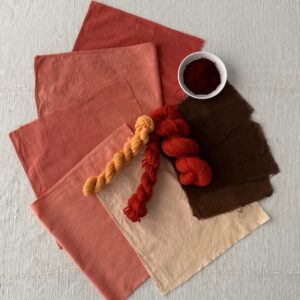
Whole Cochineal Insects

Whole Cochineal Insects

Whole Cochineal Insects 100g of Whole Cochineal Insects will dye about 900 grams (2 pounds) of fiber to a deep red shade. For detailed instructions, please see our page on dyeing with cochineal. Cochineal (Dactylopius coccus) is a scale insect that invades the nopal cactus and is about the size of a grain of rice with a silvery purple hue. The best cochineal is dark and full of carminic acid. We obtain only the finest grade cochineal on the market. You will also need a small amount of Cream of Tartar for the extraction process. Cochineal is one of the … Read more

Eucalyptus Leaf (Eucalyptus globulus)

Eucalyptus Leaf (Eucalyptus globulus) Eucalyptus globulus, also known as Tasmanian Blue Gum tree is widely used as an herbal remedy, tea and prized for its aromatic qualities. This particular variety of eucalyptus creates a warm gold color with alum mordant, and a sage color when iron is added.  It will create a highly scented dye bath, so use good ventilation if you have sensitivity. Directions for use Use Eucalyptus leaf 1:1 (enough eucalyptus to equal the weight of the mordanted fiber). Fill a dye pot with enough water to cover the eucalyptus leaves and heat to simmering.  Let simmer until … Read more

Japanese Narrow Width Cotton Fabric – Vertical Slub Stripe

Japanese Narrow Width Cotton Fabric -Vertical Slub Stripe Thisl Japanese fabric has a slightly irregular weave from a distinctive warp-wise slub stripe in the weaving process.  We are pleased to offer this lovely slub fabric that takes indigo beautifully and is amazing for clamp type shibori.  It is woven similar to silk tsumugi, or handspun, with a pleasing texture. This narrow (approx 14 inch) blend fabric is ideal for dyeing. The fabric is bleached and should be washed prior to mordanting or dyeing, but does not need scouring. We are offering this fabric by the yard (36 inches).  For orders … Read more

Japanese Narrow Width Cotton Fabric – Yukata cloth

Japanese Narrow Width Cotton Fabric – Yukata cloth When you visit a hot spring or traditional bath in Japan, you are often given a lightweight cotton robe called a yukata to wear to and from the bath.  It is made of very soft, absorbent cotton and is often printed with the name of the hotel or hot springs establishment. We are pleased to carry yukata fabric, although we’re not using it to make yukata.  It’s actually a great fabric for learning stitched resist shibori and other shibori techniques.  The fabric makes very crisp and distinct designs when used for stitched … Read more

Japanese Narrow Width Cotton Fabric – Cotton Slub

Japanese Narrow Width Cotton Fabric – Cotton Slub Thisl Japanese fabric has a slightly irregular weave from using cotton slub yarns in the weaving process, creating a beautiful crosshatch texture that enhances the color of the dye.  We are pleased to offer this lovely slub fabric that takes indigo beautifully and is amazing for clamp type shibori.  It is woven similar to silk tsumugi, or handspun, with a pleasing texture. This narrow (approx 14 inch) blend fabric is ideal for dyeing. The fabric is bleached and should be washed prior to mordanting or dyeing, but does not need scouring. We … Read more

Japanese Narrow Width Cotton Fabric – Cotton-Washi-Hemp

Japanese Narrow Width Cotton Fabric – Cotton-Washi-Hemp This is an unusual, lovely narrow width cotton-washi paper and hemp fiber blend that has a crispness and structure.  It would be beautiful dipped in indigo and has a distinctive open weave similar to a leno that allows air and light through the fabric. This narrow (approx 17 inch) blend fabric is ideal for dyeing. This is a lightweight, open weave fabric, approximately 60 grams per yard. The fabric is bleached and should be washed prior to mordanting or dyeing. We are offering this fabric by the yard (36 inches).  For orders more … Read more

Japanese Narrow Width Cotton Fabric – Tenugui Hand Towel Cloth

Japanese Narrow Width Cotton Fabric – Tenugui Hand Towel Cloth Tenugui is a plain weave cotton towel with unhemmed edges used to wipe the hands or as a handkerchief. It is usually 13 inches by 36 inches.  It’s a very simple textile dating back 1300 years and can be used as a towel, handkerchief, head covering, and other uses. The raw edges are part of its charm, as it enables the lightweight textile to dry quickly. When I was traveling in Japan this spring, there were entire shops dedicated to beautifully printed tenugui, and I succumbed to tenugui acquisition fever … Read more

Jarit Handwoven Fabric from Java

Jarit – Handwoven cotton fabric from Java

Jarit – Handwoven cotton fabric from Java We are thrilled to offer a beautiful, completely handmade fabric that is grown, processed, spun and woven by Indonesian village artisans. This rich, traditional handspun and handwoven cloth production comes from several villages in east Java where artisans grow, mill, hand spin and weave cotton cloths called jarit.  Jarit are approximately 3 meters (3.3 yards) long with raw, unfinished edges, and approximately 80cm (31.5 inches wide). The fabric is traditionally worn across the body from shoulder to hip to form a carrying sling, but it is the perfect length for garments and interior … Read more

Indigenous Kala Cotton Fabric from India

Fabric is sold by the yard. Kala cotton is an indigenous varietal from Gujurat, India and one of 20 native varieties that once existed in India. The fiber fell out of favor over conventional GMO cotton but was revitalized when growers realized that the plants require only rainfall and no irrigation with a high tolerance for disease and pests. As much of the region is semi-desert, this toothy and earthy fiber is a beautiful expression of place. Today, Kala cotton is making a comeback and provides a livelihood to desert farmers in Kachchh (Kutch). The entire community is involved in … Read more

John Marshall Teaches Kyoukechi – Complex Clamped Resist: September 13 -15, 2026

John Marshall Teaches Kyoukechi – Complex Clamped Resist We are thrilled to host our dear friend and natural dye collaborator in a special in-person appearance and invite you to experience his humor and artistic expertise with Japanese textile and dye techniques. John first apprenticed in Japan learning traditional Japanese doll-making fresh out of high school and we benefit from his wealth of textile knowledge and techniques and many years in Japan. September 13-15 (Sunday-Tuesday) 10-5 Botanical Colors 503 S Michigan St, Ste B, Seattle, WA 98108 Kyoukechi – Complex Clamp Resist   Have you ever tried your hand at itajime … Read more