Mordant Monday: Middle Mordant Magic

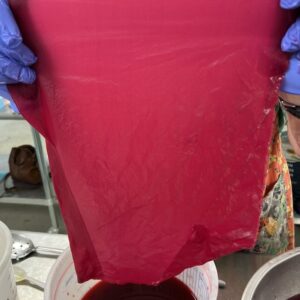
In this week’s Mordant Monday, we discuss Middle Mordant. Middle Mordant is a technique that I learned about from The Art and Science of Natural Dyes. It’s considered to be a Japanese technique and is a simple way to create rich color on silk. Middle mordant uses room temperature dye baths and you can repeat the process until the fabric is the color you want. The purpose of middle mordant is to deepen the depth of shade and most of the examples I’ve seen use silk fabric and alum mordant. There are somewhat similar techniques that old dye books discuss, … Read more
Sunday Visit: Youngmin Lee

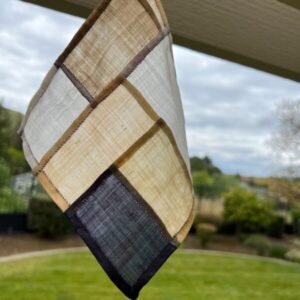
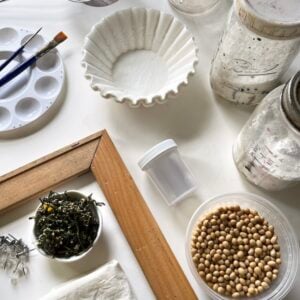
For Sunday Visit, Botanical Colors sits down for an interview with a luminary in the natural dye, textile and art world. This week we hear from renowned Korean Textile artist Youngmin Lee to talk about her upcoming workshop with us, her love of textile and her new book! Grab a cup of tea and settle in to learn about someone you never knew! Catch up on all our Sunday Visits HERE. We are announcing an exciting a workshop with her soon! We are so excited to host you next year. Can you tell us a little bit about your love of … Read more

Sunday Visit: Natalie Stopka, Materiality & Multitudes

For Sunday Visit, Botanical Colors sits down for an interview with a luminary in the natural dye, textile and art world. This week we visit with our resident Lake Pigment expert Natalie Stopka to talk about her upcoming workshop with us! Grab a cup of tea and settle in to learn about someone you never knew! Catch up on all our Sunday Visits HERE. What first sparked your interest into natural plant color? About 15 years ago I had the realization that instead of purchasing all the materials for a piece of art (an artist book in this case), I could … Read more

Mordant Monday: A NERD’S GUIDE TO MORDANTS

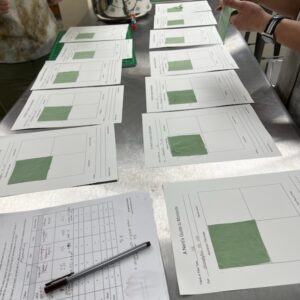
Kathy is currently creating magic at Sanborn Mills for her Nerd’s Guide to Mordants workshop. We decided to give you a little taste into all of the beautiful mordant variations she is creating for this workshop and some of the key considerations you should take into account when beginning to mordant. For all of you budding mordant nerds out there, here are some highlights of what is covered during the class. We are working on bringing this class to you in online form, so here is a little teaser while you wait! What is a Mordant? A mordant is a … Read more

Mordant Monday: Sneak peek of a new product

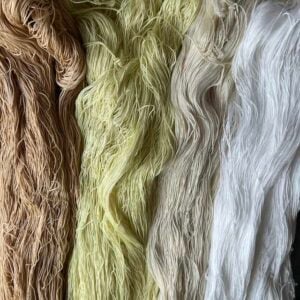
Mordanted Sashiko Thread with Different Tannin Options! Now you have the convenience of using tannins and a pre-mordanted thread to create your own color palettes and who doesn’t love that? Pictured from Left to Right: Cutch and Alum mordant, Sumac and Alum mordant, Gallo-Tannin and Alum mordant, and PFD, unmordanted Sashiko Threads We’ve been busy adding to our very popular mordanted product line, and will be offering mordanted Sashiko threads using three different mordant variables. The light brown color is Cutch, a light brown tannin, the yellow is Sumac, a yellow-based tannin, the light cream is Gallo-Tannin, a “clear” tannin, … Read more

Sunday Visit: Kristin Field of Field & Gardener

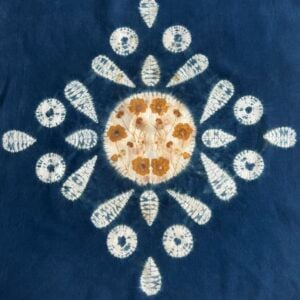
For Sunday Visit, Botanical Colors sits down for an interview with a luminary in the natural dye, textile and art world. This week we visit with the inimitable Kristin Field of Field & Gardener who has an upcoming workshop with us! Grab a cup of tea and settle in to learn about someone you never knew! Catch up on all our Sunday Visits here. We are huge admirers of your Shibori bursts, can you tell us about how this process originated for you? Thank you so much! When I first learned about capping, the thought of putting an ecoprint in the … Read more

Mordant Monday: Q&A

Mordant Monday this week is all about questions:  some are mordanting questions and others are the victims of spellcheck.   I changed my mind How do I change a mordant after the fact?  I have some wool and cotton fabrics with alum on them but I really want to have them mordanted with iron instead. Can I remove the alum and start with an iron base? Answer:  Alum mordants are very durable and long-lasting bonds, and while there are a few substances that can weaken or damage them, using them would probably also damage the fabric and we don’t recommend this … Read more

Sunday Visit: The Storytellers Studio Coat with Jody Alexander

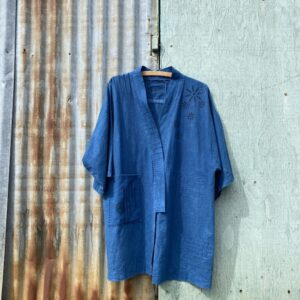
For Sunday Visit, Botanical Colors sits down for an interview with a luminary in the natural dye, textile and art world. This week we visit with the inimitable Jody Alexander who has an upcoming workshop with us! Grab a cup of tea and settle in to learn about someone you never knew! Catch up on all our Sunday Visits here. We are so excited to host you this October! Can you tell us a little bit about the origin of the Studio Storyteller Coat? I love the ethos of mending and repair as a thread that ties your work together. We … Read more

Mordant Monday: In the clutches of Cutch

This week’s Mordant Monday explores another well known and important tannin: Cutch. Cutch is a wood dye from Senegalia catechu (formerly Acacia catechu), an acacia species that grows in South and Southeast Asia. The dye is both a colorant, and a traditional medicine. It is also the by-product from the manufacture of “katha”, which is a crystalline substance that is an ingredient in paan or betel nut leaf, which is an Indian mouth freshener and digestive. We’ve never tried paan, but we love cutch for its versatility and deep colors. It’s a sweet-smelling dye and the color yield ranges from … Read more

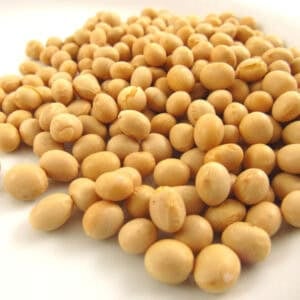
Organic Soybeans

Mordant Monday: I’m Soy Happy!

In today’s Mordant Monday (excuse the awful pun – I found it online), we check out how to use soy as a binder for natural dyes and pigments. Before the widespread use of acrylic paints and mediums, artists had ingredients from the natural world to use for painting and printing on paper and canvas. They used a wide range of natural binders including tree sap, milk, egg, oils, minerals and other substances that helped pigments stay attached to substrates. In Japan, soybeans are the most common binder for textile work, and it serves as a sizing to add body to … Read more