MORDANT MONDAY: What Mordant For Viscose?

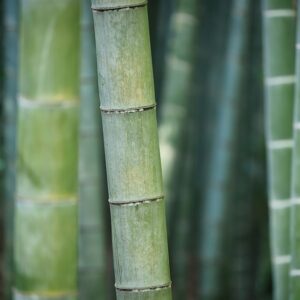
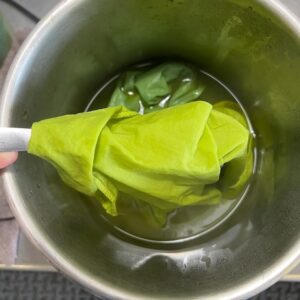
YOU ASKED: I received some organic bamboo pillowcases that I would like to bundle dye. Per their website they are crafted from 100% viscose from organically-grown bamboo. Does viscose take color? If so, what is the best mordant to use to get the most vibrant and long-lasting bundle dyeing color? KATHY ANSWERED: Natural dyes work well with viscose, which is the name typically used for fibers extruded from cellulose material, such as bamboo and wood products using a chemical process. It’s sometimes referred to as “rayon” and can contain a number of difference cellulose bases. If you are planning to bundle dye, … Read more

Harmonious and Humongous Color…

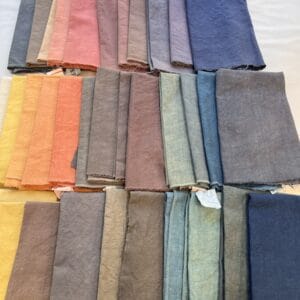
Above: each row represents a rainbow that the teams dyed. From top to bottom: Gallo Tannin, Cutch and Myrobalan I just returned from a 5 day workshop at Sanborn Mills Farm, a favorite place to teach natural dye classes. They cultivate a full dye garden just steps away from the dye studio, and the entire farm, animals, historical buildings, teaching facilities and workshops are endlessly inspiring. My workshop started out with a challenging, but modest proposition that we work in three teams and create 12 colors for each team, 36 colors total. Each group chose a palette and we got … Read more

MORDANT MONDAY: Indigo & Discharging Mordants

Mordant Monday is our Monday blog where we provide information about the most important step in natural dyeing! We were feeling the Indigo fever after Britt Boles workshop – Fresh Indigo Five ways, so we revived (no indigo pun intended) this Mordant Monday about Indigo & discharging mordants. YOU ASKED: My question involves the processes of indigo dyeing when combined with other plant dyes that have been mordanted with aluminum acetate. My understanding is that citric acid discharges the mordant and also neutralizes the alkalinity of indigo as a last step in finishing indigo dyed cloth. How would you go … Read more

Mordant Monday: Spotlight on Quebracho Moreno

For this Mordant Monday, we are diving into Quebracho Moreno. Quebracho (Schinopsis balansae and Schinopsis lorentzii) is an evergreen tree that grows wild in South America. It grows mainly in Argentina and Paraguay in dense sub-tropical forests which also include a variety of other trees and vegetation. The name is due to its hardness, and comes from two Spanish words, quebrar and hacha, meaning “axe breaker”. In fact, quebracho has been used locally for posts, telegraph poles, bridge timbers, railway ties, paving blocks and for any construction where great durability is desired. Quebracho Moreno (we used to carry a Quebracho Rojo, so we called this one Moreno) … Read more

Mordant Monday: In the clutches of Cutch Dye

Cutch Dye This week’s Mordant Monday explores another well known and important tannin: Cutch. Cutch is a wood dye from Senegalia catechu (formerly Acacia catechu), an acacia species that grows in South and Southeast Asia. The dye is both a colorant, and a traditional medicine. It is also the by-product from the manufacture of “katha”, which is a crystalline substance that is an ingredient in paan or betel nut leaf, which is an Indian mouth freshener and digestive. We’ve never tried paan, but we love cutch for its versatility and deep colors. It’s a sweet-smelling dye and the color yield … Read more

Mordant Monday: Tannin Rainbow with Chestnut, Fustic, Iron and Indigo

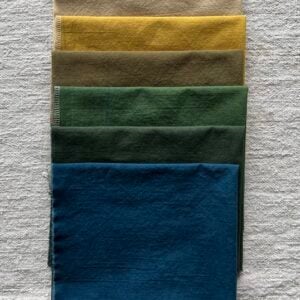
Tannin Rainbow with Chestnut, Fustic, Iron and Indigo This week’s Mordant Monday focuses on Chestnut. We used Chestnut extract in our gradation and absolutely loved the combination of Chestnut, Fustic and Iron with Indigo. This gradation is slightly different than our previous experiments. This time I did not overdye with a warm shade like Madder, to get corals and pinks. I wanted to focus on green and blue. Like previous examples, when a tannin is combined with other colors you can get exciting mixes and beautiful color blends that harmonize and are perfect for patchwork, creating gradations and stitching. If … Read more

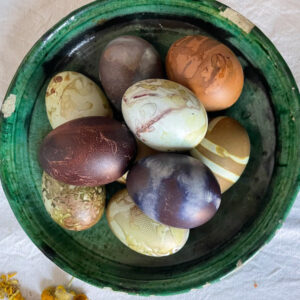
multicolored dyed eggs in a green ceramic bowl

Dye Easter Eggs With Natural Dyes

Everyone from kids to adults love to get their hands messy when they dye Easter eggs with natural dyes. This is a fun tutorial for adults and kiddos (parents help, please) to make a little Easter magic. First things first, let’s talk about health & safety: We always recommend working in a very well ventilated area. Although natural dyes are non-toxic, when using fine powders it’s best to wear a mask, and keep the windows open. Be mindful around little ones and pets as you don’t want anything going in mouths that shouldn’t be there. Also, when beginning to set … Read more

Mordant Monday: LIME GREEN

On this Saint Patrick’s Day, learn how to make this punchy lime green! We are pulling this exciting color back from our archives. Wink wink, you might remember it from this summer…Using weld and indigo, you can get awfully close to this punchy acid green. Natural dyes are often thought of as pastel or “soft” colors, but we’re here to help you make a hue that really packs a punch! This is the basic recipe Start with a mordanted cotton bandana, soak it in warm water for 30 minutes to thoroughly wet it out, and dip in a very light … Read more

Mordant Monday: Planting a Dye Garden

“the sunflowers themselves far more wonderful than any words about them.”― Mary Oliver, Upstream: Selected Essays Spring is coming so now is the chance to grow a few pots of your own color: dye flowers or indigo, or perhaps plant out some madder root for future harvest. Growing dye plants from seed is very rewarding, and you may have enough starts to share with your friends and community. There is a magic to walking outside and checking to see how the dye plants are doing. A few minutes inspecting, watering and talking to them is immensely calming. Watching the pollinators feast reminds … Read more

Mordant Monday: A Great Red with Madder Extract

My notes on how to make a great red. Madder extract is the perfect ingredient for a beautiful, vibrant red that almost glows because it has a gorgeous golden undertone. Sometimes the color veers toward a winey burgundy (equally beautiful), but I wanted to get almost a glowing ember feel to this yarn. To so this, I used a little bit less madder and the minimum amount of calcium carbonate. Here’s how I did it. Materials Instructions Where’s the Cream of Tartar? Cream of tartar is a great mordant additive for dyeing as it helps keep wool soft and assists … Read more