Mordant Monday: Middle Mordant Magic

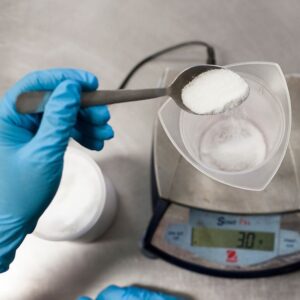
In this week’s Mordant Monday, we discuss Middle Mordant. Middle Mordant is a technique that I learned about from The Art and Science of Natural Dyes. It’s considered to be a Japanese technique and is a simple way to create rich color on silk. Middle mordant uses room temperature dye baths and you can repeat the process until the fabric is the color you want. The purpose of middle mordant is to deepen the depth of shade and most of the examples I’ve seen use silk fabric and alum mordant. There are somewhat similar techniques that old dye books discuss, … Read more

Mordant Monday: A NERD’S GUIDE TO MORDANTS

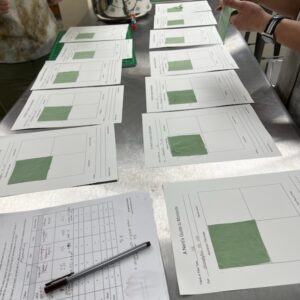
A Nerd’s Guide to Mordants Kathy is currently creating magic at Sanborn Mills for her Nerd’s Guide to Mordants workshop. We decided to give you a little taste into all of the beautiful mordant variations she is creating for this workshop and some of the key considerations you should take into account when beginning to mordant. For all of you budding mordant nerds out there, here are some highlights of what is covered during the class. We are working on bringing this class to you in online form, so here is a little teaser while you wait! What is a … Read more

Mordant Monday: Sneak peek of a new product

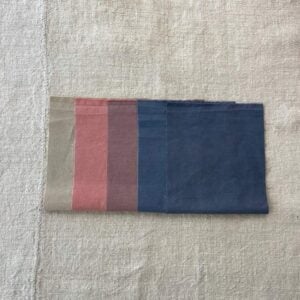
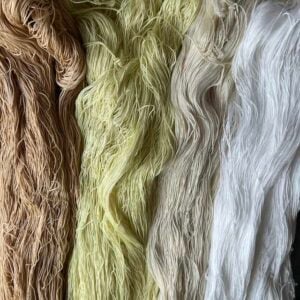
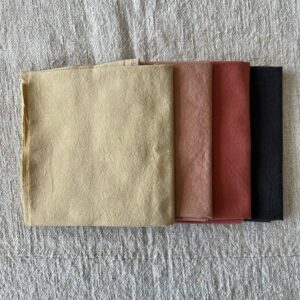
Mordanted Sashiko Thread with Different Tannin Options! Now you have the convenience of using tannins and a pre-mordanted thread to create your own color palettes and who doesn’t love that? Pictured from Left to Right: Cutch and Alum mordant, Sumac and Alum mordant, Gallo-Tannin and Alum mordant, and PFD, unmordanted Sashiko Threads We’ve been busy adding to our very popular mordanted product line, and will be offering mordanted Sashiko threads using three different mordant variables. The light brown color is Cutch, a light brown tannin, the yellow is Sumac, a yellow-based tannin, the light cream is Gallo-Tannin, a “clear” tannin, … Read more

Mordant Monday: Q&A

Mordant Monday this week is all about questions:  some are mordanting questions and others are the victims of spellcheck.   I changed my mind How do I change a mordant after the fact?  I have some wool and cotton fabrics with alum on them but I really want to have them mordanted with iron instead. Can I remove the alum and start with an iron base? Answer:  Alum mordants are very durable and long-lasting bonds, and while there are a few substances that can weaken or damage them, using them would probably also damage the fabric and we don’t recommend this … Read more

Organic Soybeans

Soymilk as a Printing Binder for Mordant Monday

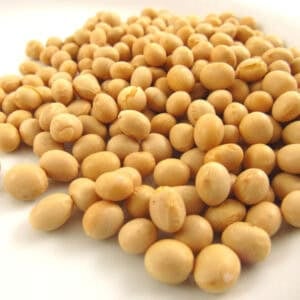
Soymilk as a printing binder In today’s Mordant Monday (excuse the awful pun – I found it online), we check out how to use soy as a binder for natural dyes and pigments. Before the widespread use of acrylic paints and mediums, artists had ingredients from the natural world to use for painting and printing on paper and canvas. They used a wide range of natural binders including tree sap, milk, egg, oils, minerals and other substances that helped pigments stay attached to substrates. In Japan, soybeans are the most common binder for textile work, and it serves as a … Read more

Mordant Monday: A Feedback Friday Rerun!

Today for Mordant Monday we thought we would bring a classic back from the vault and highlight one of our YouTube videos where Kathy answers your mordanting Questions!

Have fun with our video below. Don’t forget to Like, Comment & Subscribe!

See Amy’s original post below:
This week: Weeks worth of mordanting questions melded into one FEEDBACK FRIDAY!

Watch here.
Read more

Mordant Monday: Gallo Tannin Gradation with Fustic and Madder

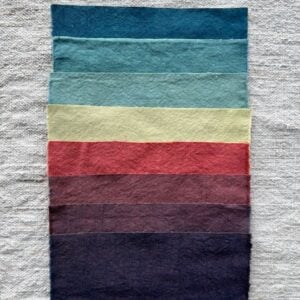
Gallo Tannin Gradation with Fustic and Madder This week’s Mordant Monday focuses on Gallo Tannin, also known as Oak Gall tannin, or Oak Galls. We used the extract made from Oak Galls in our gradation, but a similar result comes from oak galls that have been crushed or pulverized. Gallo Tannin is one of the ancient tannins with many uses, including making black ink, leather tanning, and in traditional Asian medicine. It is the most commonly used tannin when mordanting with tannin + alum, as the color it imparts is very light, and it doesn’t show a strong undertone, like … Read more

Mordant Monday: R U Mordant Curious?

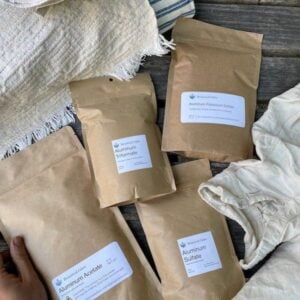
For Mordant Monday, we answer your Mordant Questions and dive into everyone’s favorite topic: MORDANTS. Are you Mordant Curious? I received a great question about the mordants we carry. Like, you have so many. What is the difference? Does it really matter? Having a variety of mordant choices allows you as an artist to consider your materials before you start creating. For example: if you are dyeing a cellulose fabric, you can use aluminum acetate, or you can use a tannin pre-mordant and then apply aluminum sulfate as the mordant. They will give you different results. We’ve created a table … Read more

Mordant Monday: Spotlight on Sumac

Spotlight on Sumac Taking a little time to work more closely with tannins has been incredibly interesting! This week’s tannin exploration focuses on Sumac. Sumac is from the Rhus genus and its scientific name is Rhus coriaria. It’s native to southern Europe and western Asia where it is commonly known as Tanner’s Sumac or Sicilian Sumac. We are fortunate to have number of North American native sumac including Rhus glaubra, sometimes called Smooth Sumac, and Rhus typhina or Staghorn Sumac, known for its dramatic bright red berry clusters. The staghorn berries were used by indigenous people as a tea, and … Read more

Mordant Monday: Walnut, Madder, Iron and Indigo

Black Walnut Juglans nigra is one of our most interesting tannins and it’s a color that’s native to the North American continent. The entire tree contains color but it is in the green hulls that we find a strong concentration of dark tannins yield light beige to golden brown on cellulose. On wool, black walnut really shines and makes a rich brown shade. Walnut Hull Powder from black walnut (Juglans nigra) is a common source of brown dye throughout North America. The fleshy hulls are full of tannin, juglone and other pigments and are the primary source of the dye. … Read more