Indigo Instructions

Our indigo instructions originally used a recipe based on Michel Garcia’s 1-2-3 vat, created nearly 10 years ago. Since then, we’ve made some changes and developed different recipes that will allow you to control how light or dark your vat is. Types of Vats: There are three main types of vats that you can build. Use the indigo instructions below to decide which one is best for you.  Vat type About Advantages Disadvantages Fructose Clearest blue Dyes lighter than henna or iron Seems to perform best when aged for 2-3 days, and when warmed before use. Henna Warmest blue/yellow cast … Read more
Mordant Monday: Overdyeing: Indigo First, or Indigo Second?

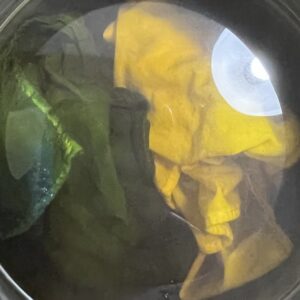
Indigo first, or indigo second? We get mordant questions all the time at Botanical Colors so why not create Mordant Monday??? Got mordanting questions? Email [email protected] YOU ASKED: Do you always dye indigo first before overdyeing with another color? Does it make any difference? KATHY ANSWERED: When I was starting out, I was advised to dye with indigo first, rinse, mordant my fabric, and then dye with a mordant color second in order to create any type of compound color when indigo is involved. We largely agree with this as most of our production colors start with an indigo shade … Read more

CURATED COLOR : Indigo

We have gathered all of our Indigo related items, journal posts and recipes in one place to start you on your Indigo Journey! These carefully selected items highlight our love of all things blue SHOP OUR TOP SELLING BLUES Learn More About Indigo A Free Video Tutorial on How To Make A Henna Indigo Vat Upcoming Indigo Workshops

How to Dye with Fresh Indigo

A beautiful blue with ice water and just-picked indigo leaves Our thanks to John Marshall for this easy recipe on how to dye with fresh indigo! One of the delights of growing your own Japanese indigo is making fresh indigo leaf baths and dipping for that beautiful and elusive slightly turquoise shade. What makes it even more special is that it works great on silk, and the fabric really shows off the color. For this process you will need: Instructions You will need a generous armful of indigo stalks to dye a few silk scarves or yarns. Wool will also dye beautifully with fresh … Read more

How to Minimize Indigo Crocking

1. Crocking, or ruboff, is a quality of indigo. Most people will tolerate a small amount of crocking, but too much! 2. Certain cultures attribute indigo crocking to its authenticity and prize the way that excess indigo comes off on the hands or body. I found a description from Duncan Clarke  of Adire African Textiles on how West African cultures dye and prepare indigo cloth: “After the dyed cloth had dried it was customary to beat the fabric repeatedly with wooden beaters, which both pressed the fabric and imparted a shiny glaze. In some areas additional indigo paste was beaten … Read more

Hide Glue Indigo Vat Instructions

These instructions will help you understand how to use hide glue in an indigo vat. Hide glue is a protein based adhesive used in fine woodworking and antique restoration and for thousands of years was the most common woodworking glue until the invention of polyvinyl acetate and resin glues in the 20th century. It is made from animal skins, bones and connective tissue and is a tenacious adhesive yet also water soluble and non toxic and not hazardous. Artists use rabbit skin glue to size canvases.  People also use it in bookbinding and to prepare certain art mediums. For textile … Read more

Frequently Asked Questions About Indigo

Glossary Indigo: Indigo is a pigment from the leaves of the indigo plant called Indigofera tinctoria, one of the oldest dyes known to humankind. It is the only natural plant-based blue and its colorant is present in other plants, including woad (Isatis tinctoria), Japanese indigo, (Persicaria tinctoria, a buckwheat) and Strobilanthes cusia, a distant cousin to the ornamental Persian Shield that you can buy at Home Depot. Indigo was used to dye shrouds for Egyptian burials, uniforms for Napoleon’s Army, prestige cloth for African chiefs and to dye denim for blue jeans. Indigo was a valued historical crop and grown and tended by enslaved people … Read more

Resist Dyeing with Indigo for FEEDBACK FRIDAY

Each week, we are emailed with questions from our natural dye community asking simple and complex questions that we thought might be worth sharing. Here are a handful from this week answered by natural dyer in chief, Kathy Hattori, Founder of Botanical Colors: I would like to be able to make variegated yarn from a finished skein (as opposed to spinning my yarn from various colored fibers, which is what I do now). I’ve done most of my dyeing on wool that I spin and then weave, but would like to dye cotton and hemp fabric. I am not able … Read more

Make An Easy, Organic Indigo Vat

Easy Organic Indigo Vat In 2009 and 2010 I had the opportunity to study with natural dye master Michel Garcia.  He is a marvelous and knowledgeable teacher,  fascinated with using the chemistry of simple ingredients to create natural colors.  One of the things that he demonstrated to us was to be fearless about the indigo fermentation vat.  What a gift!  For me, the indigo fermentation vat has always been a mystery and I could never quite figure out all the details so I never pursued it.  I was getting great and consistent color with my lye and soda ash and chemical … Read more

Support Aboubakar Fofana’s Indigo Farm Project

Our friend and artist Aboubakar Fofana has spent the past 10 years building a vibrant farm in rural Mali, West Africa, to cultivate indigo and grow food. The farm is key to Aboubakar’s vision to use indigenous fibers, weaving, mud pigments and indigo to create his body of work and he is the only Malian indigo artist who grows his own organic indigo. The farm, studio and the other groups Aboubakar works with employs over 120 craftspeople including cotton farmers, spinners, weavers, blacksmiths, wood workers and villagers, who supplement their income and develop skills under Aboubakar’s guidance. The farm is … Read more