Aluminum Acetate Mordant Bundle – Group & Save

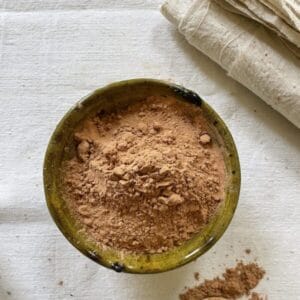
Aluminum acetate is a purified mordant powder that creates bright colors on plant fibers like cotton, linen, hemp, Tencel, viscose and other plant-based fibers. It is an alternative mordant to traditional tannins. Mordanting is an important step in natural dyeing as it helps improve light and wash-fastness. Its purpose is to provide a bond between the fiber and the dye molecule. Without a mordant bond, natural dye colors will fade, change color and wash out. Detailed instructions on working with aluminum acetate are available here. Because recommend using either calcium carbonate (chalk) or wheat bran with aluminum acetate, we have bundled these products … Read more
Tannin + Alum Mordanted Sashiko Thread Bundle

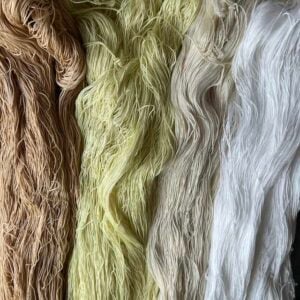
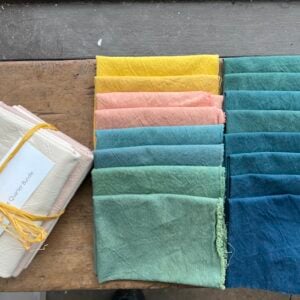
Tannin + Alum Mordanted Sashiko Thread Bundle We are now offering our popular PFD sashiko threads mordanted in three different, beautiful tannin shades.  Each bundle of 10 skeins is one tannin color that is also mordanted in aluminum potassium sulfate.  This is an easy mordant option to create gradations and nuanced color in your stitching and dye work. The three mordant options are Gallo Tannin (Oak galls), known as a “clear” tannin with a creamy coloration that imparts virtually no shade differences from regular alum mordants. Sumac Tannin, imparts a subtle, soft yellow undertone to many colors, and shifts light … Read more

Mordant Monday: Celebrating Earth Day & Vibrant Valley Blue

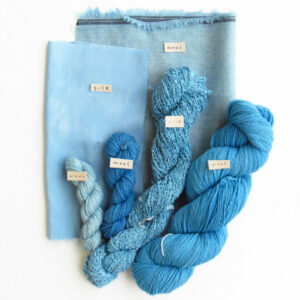
Vibrant Valley Blue Indigo Paste We are thrilled to introduce a new, Pacific Northwest-based indigo paste from the incredible growers and dyers at Vibrant Valley Farm.  Kara Gilbert and her skilled team created Vibrant Valley Blue, a Persicaria tinctoria indigo extract. This product is based on years of growing, harvesting and experimenting with varieties, cultivation and extraction and they’ve scaled their production from a few hundred starts to a robust crop of over 10,000 plants.  The resulting indigo paste is easy to use and creates a beautiful clear blue.  Kara used this indigo to dye a number of garments and … Read more

NOW October 11th & 12th, 2025: A Nerd’s Guide to Mordants

A Nerd’s Guide to Mordants A two-part online workshop Saturday September 13 and Saturday September 20 from 10 AM to 1 PM Pacific. Taught by Kathy Hattori Workshop links, materials and equipment list and pre-work instructions will be sent to participants upon registration. This is the nerd’s guide to mordants – what they are, why they are important and how they are used in natural dyeing. Everyone wants to create long-lasting and beautiful plant color and the best way to do that is to mordant properly.  The class will experiment with the most popular plant-based tannins and alum accumulators, mineral salt … Read more

10 Tannins That Don’t Need a Mordant

There are so many mordant variations and we urge you to experiment and find the one that works best for you. If you’re not familiar with the term, mordanting is the most important process of preparing fibers to accept color. Mordanting prepares fibers to bond with natural dyes and is typically a separate immersion bath for the fibers. Many natural dyes require the use of a mordant to achieve the most durable and long lasting colors. Though you might start with the tried and true aluminum mordants, consider trying tannin-rich extracts that not only offer a base color, they prep … Read more

MORDANT MONDAY: What Mordant For Viscose?

YOU ASKED: I received some organic bamboo pillowcases that I would like to bundle dye. Per their website they are crafted from 100% viscose from organically-grown bamboo. Does viscose take color? If so, what is the best mordant to use to get the most vibrant and long-lasting bundle dyeing color? KATHY ANSWERED: Natural dyes work well with viscose, which is the name typically used for fibers extruded from cellulose material, such as bamboo and wood products using a chemical process. It’s sometimes referred to as “rayon” and can contain a number of difference cellulose bases. If you are planning to bundle dye, … Read more

Aquarelle Liquid Indigo - Saxon Blue

MORDANT MONDAY: Mordant With Liquid Dye + Reusing Baths

For this Mordant Monday – We bring you a question about our Saxon Blue Liquid Indigo! YOU ASKED: Should I mordant (alum is my go to) for your liquid dye indigo? I have read that it is not a needed step but also don’t want to dye without alum and make a big mistake. Hoping you can clarify please!! KATHY ANSWERED: Thanks for your email and the question.  The liquid indigo, also called Saxon Blue, was developed in the 1700s to dye wool. We recommend that you mordant and alum is perfect prior to dyeing, and you can also add … Read more

MORDANT MONDAY: Indigo & Discharging Mordants

Mordant Monday is our Monday blog where we provide information about the most important step in natural dyeing! We were feeling the Indigo fever after Britt Boles workshop – Fresh Indigo Five ways, so we revived (no indigo pun intended) this Mordant Monday about Indigo & discharging mordants. YOU ASKED: My question involves the processes of indigo dyeing when combined with other plant dyes that have been mordanted with aluminum acetate. My understanding is that citric acid discharges the mordant and also neutralizes the alkalinity of indigo as a last step in finishing indigo dyed cloth. How would you go … Read more

MORDANT MONDAY: To Mordant Or Not To Mordant + Disposing Of Mordant Baths

We get mordant questions all the time at Botanical Colors so why not create Mordant Monday??? Got mordanting questions? Email [email protected] What is Mordanting? Mordanting is the most important process of preparing fibers to accept color. Using a mordant helps to ensure the most durable and long-lasting colors. With the exception of indigo (as a vat dye, it does not require a mordant), this is not an optional step. However, there are many different mordants you can use. Deciding which mordant to use comes down to the types of fibers you want to dye and how much time or energy … Read more