
Can I Scour and Mordant At the Same Time?
We get mordant questions all the time at Botanical Colors so why not create Mordant Monday??? Got mordanting questions? Email [email protected] What is Mordanting? Mordanting is the most important process of preparing fibers to accept color. Using a mordant helps to ensure the most durable and long-lasting colors. With the exception of indigo (as a vat dye, it does not require a mordant), this is not an optional step. However, there are many different mordants you can use. Deciding which mordant to use comes down to the types of fibers you want to dye and how much time or energy … Read more
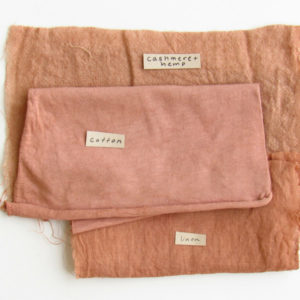
This is a Botanical Colors coral natural dye recipe for a classic, madder color in a soft salmon hue guaranteed to sing you into spring. Dyer’s notes: You can use the same coral natural dye recipe for animal or plant fibers. We recommend mordanting to achieve the best results. Your mordant options are aluminum potassium sulfate (for animal fibers), or aluminum acetate or symplocos (for plant fibers). Symplocos is an alum bioaccumulator from dried leaves and we’ve used it successfully on both animal and plant fibers. In its native Indonesia, it’s used mostly on plant fibers. Step 1 – Weigh … Read more
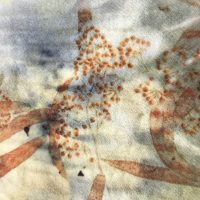
[vc_row][vc_column][vc_column_text]This week: Muting oranges and reds from eco-printing and using three types of logwood for different impacts.
Each week, we are emailed with questions from our natural dye community asking simple and complex questions that we thought might be worth sharing. Here are a handful from this week answered by natural dyer in chief, Kathy Hattori, Founder of Botanical Colors: Is there any way to remove iron from fabric to brighten it up? Iron is a reliably “permanent” mordant, which is why it is used to enhance light and “washfastness” with dyes that are weak in these categories. I have not seen a reversible method for removing iron. I keep getting mixed answers from people about dyeing … Read more

Each week, we are emailed with questions from our natural dye community asking simple and complex questions that we thought might be worth sharing. Here are a handful from this week answered by natural dyer in chief, Kathy Hattori, Founder of Botanical Colors: I just saw that Pantone created Love Symbol #2, an amazing shade for my favorite musician, Prince. Do you have an idea of how to create that color? Logwood chips used at about 50% wof with wool or silk mordanted with aluminum sulfate only (no cream of tartar) will make a rich reddish purple very … Read more
Botanical Colors
Seattle, WA
© Botanical colors 2026