
A Textile Tour to Bali and Sumba, Indonesia
AN EXPERIENCE OF A LIFETIME
Explore the Colors of Bali and Sumba with The Threads of Life: Traditional dye practice and indigenous textiles
May 14-31, 2026
Step into the Threads of Life studio in Ubud for six days of immersion in Indonesia’s natural dyes. Learn indigo, batik, and weaving traditions from expert artisans while surrounded by natural dye gardens and the creative energy of Bali.

Overview of our Textile Tour to Bali and Sumba, Indonesia
Our group will be led by Kathy Hattori and Cara Piazza of Botanical Colors, and Jean Howe and William Ingram of Threads of Life. Our studio instructors include talented Indonesian textile teachers from Threads of Life and affiliated artisans, who have worked with Jean and William for many years. This tour provides an opportunity to meet and learn from Indonesian artists and indigenous communities with insight and connections that will endure long after our visit is over.
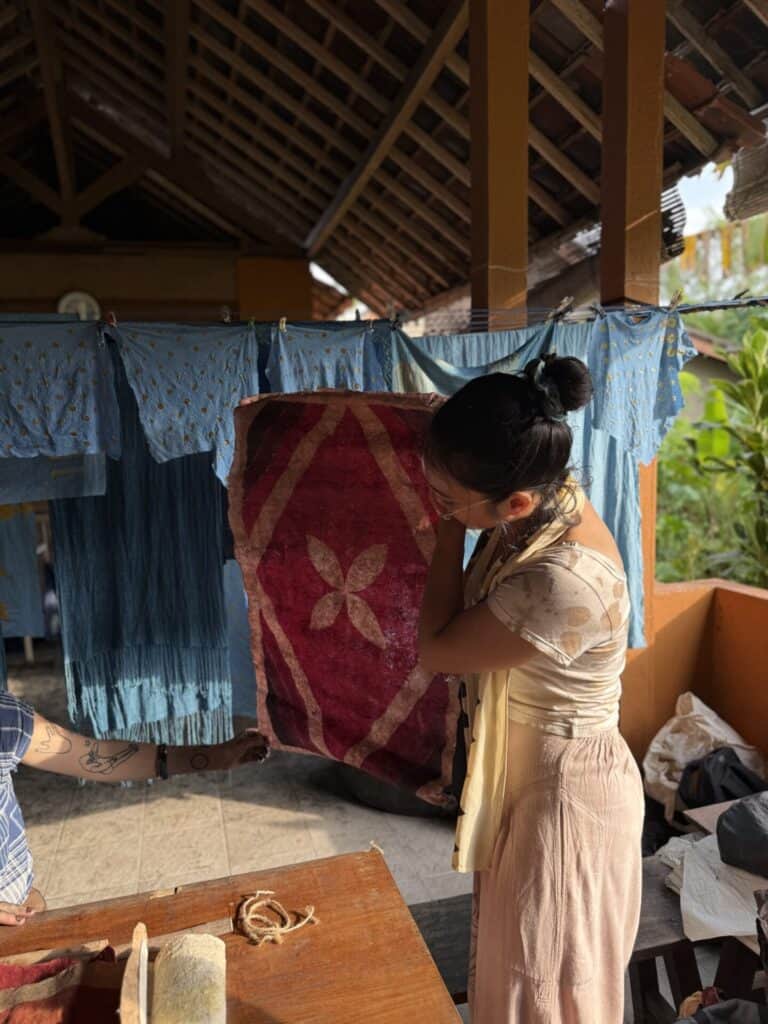
Studio time includes instruction in batik using traditional stamps and drawing tools, clamped, wrapped and stitch resist with indigo, and a traditional weaving demonstration and opportunity to meet a master weaver as well as a Bark Cloth Workshop with the Cinta Bumi Artisans. There will be ample time to work on personal projects during studio sessions.
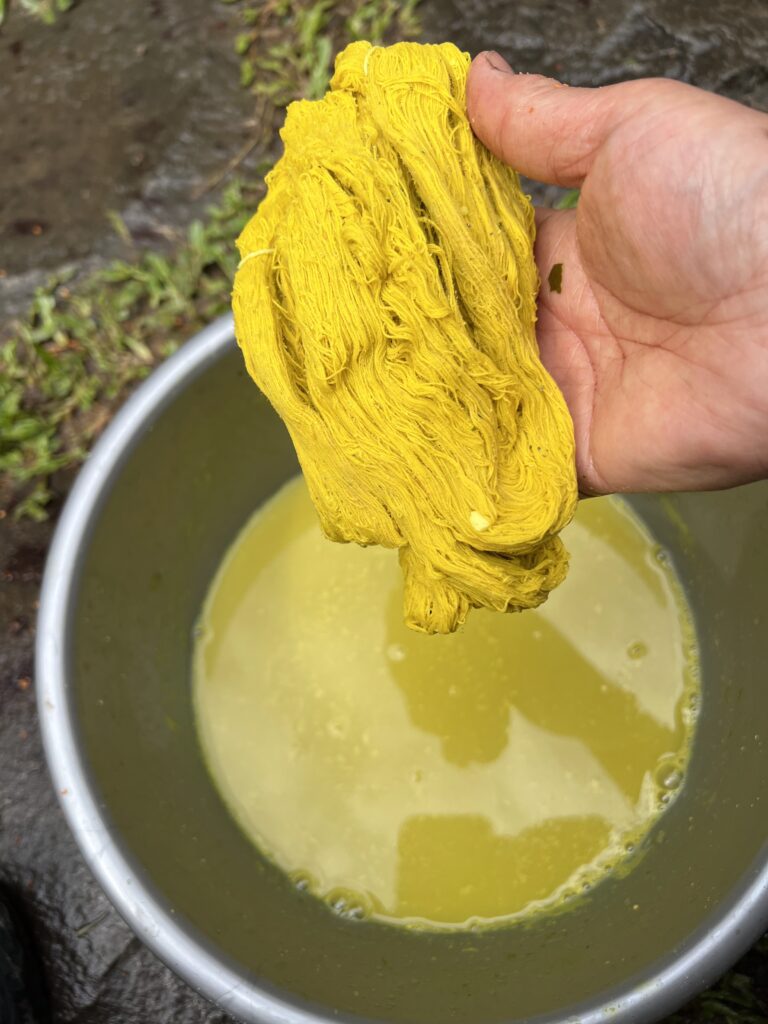
Our group will have the opportunity to work in large (approx. 150 gallon) indigo vats for larger scale indigo projects. Working where dye plants are grown at scale, this tour offers a unique opportunity to work with large volumes of indigo-bearing plants and dye in large indigo vats.
THE COLORS OF INDONESIA
HIGHLIGHTS
Work alongside Balinese artisans in Threads of Life’s dye studio, discovering how natural color connects creativity, ecology, and community.
Uncover a realm of opportunities.
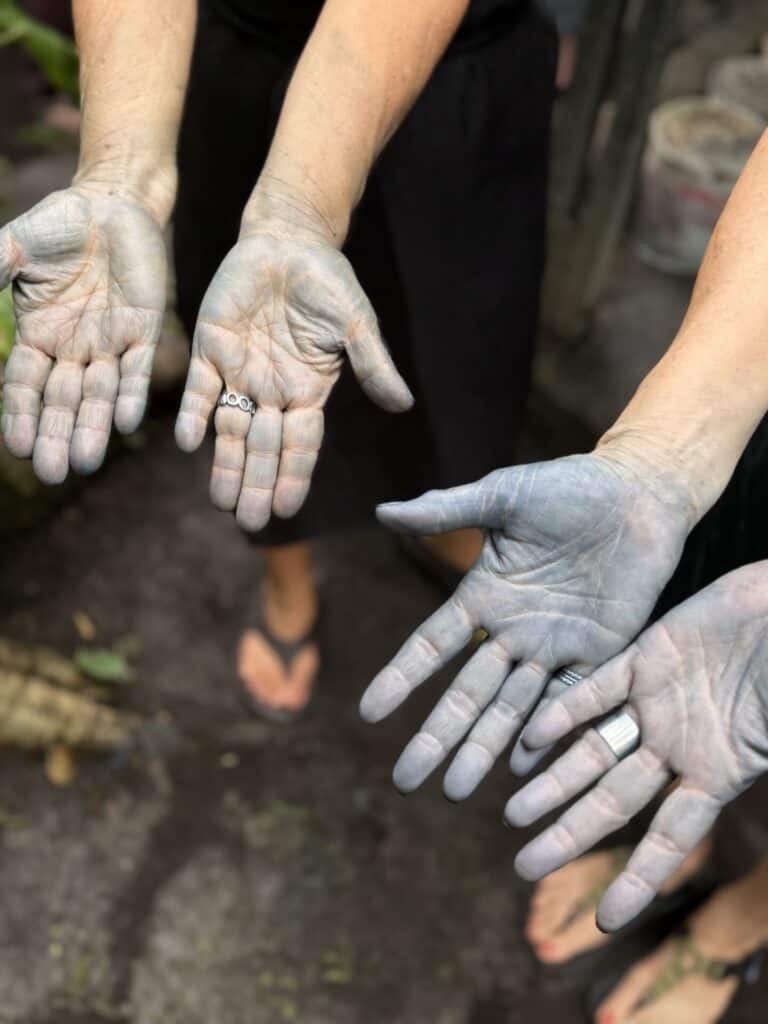
Dip your hands into the living blues of indigo and watch transformation unfold, one layer at a time.
About Threads of Life
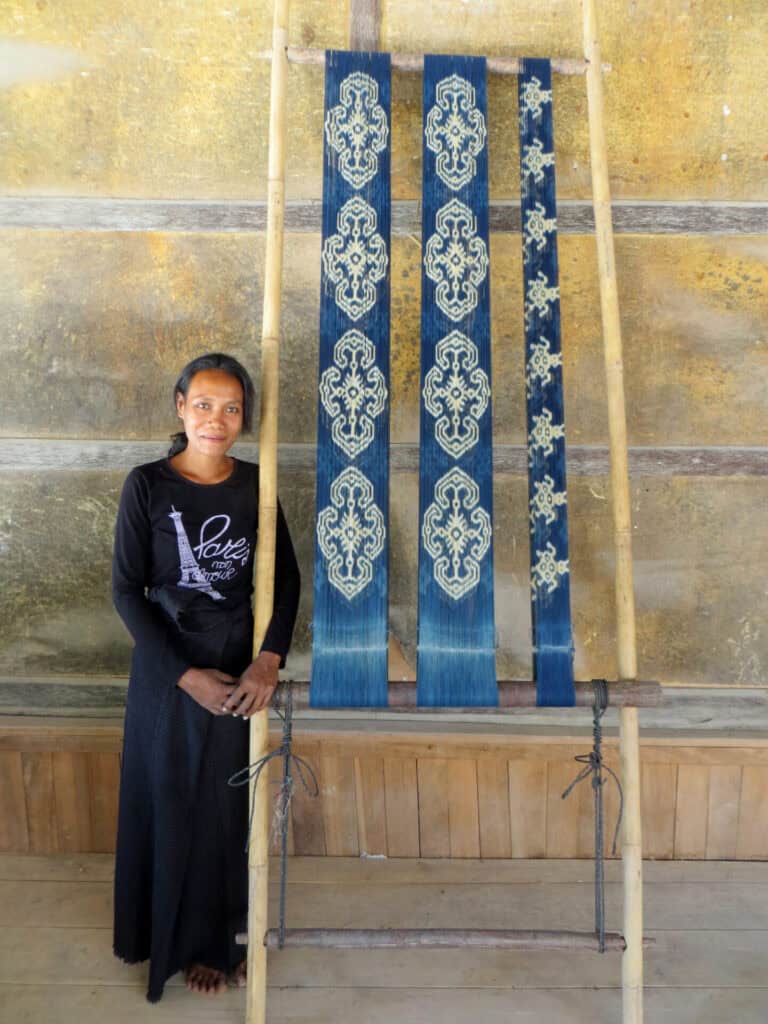
At Threads of Life you encounter the highest expressions of Indonesia’s living textile and basketry heritage. Threads of Life represents the work of 1200 natural dyers and weavers from 12 islands across the archipelago. Behind the scenes, they have forty staff working directly with the indigenous communities they serve. In the field, Threads of Life works to document and sustain endangered natural dye traditions. In the dye studio they research traditional recipes and teach classes and workshops to share this wisdom with the world. Threads of Life’s textiles and baskets express traditional aesthetics and embody meanings associated with an ancestral worldview that they convey to their customers. By aligning with indigenous culture in its fieldwork and business, Threads of Life alleviates rural poverty, assists weavers to form independent producer groups, and facilitates their sustainable management of natural resources. The Threads of Life Dye Studio and Garden Central to Threads of Life’s community support has been 25 years of field research documenting, testing, and teaching the archipelago’s natural dye traditions. Our field teaching method is to bring master dyers and young makers together and then facilitate the transmission of knowledge between generations within a tradition. Our research studio has expanded over time to become a production studio, using traditional recipes to dye cloth for the homewares we sell in our store and gallery. And our teaching work now includes the offering of half-day to week-long workshops to an international audience. Pivotal to Threads of Life’s field work has been the development of a 250-species dye plant herbarium of plants used by partner communities and the establishment of a dye plant botanical garden and nursery, both of which are adjacent to and create an enchanting setting for time spent in the dye studio.
BALI
ITINERARY
BALI ITINERARY
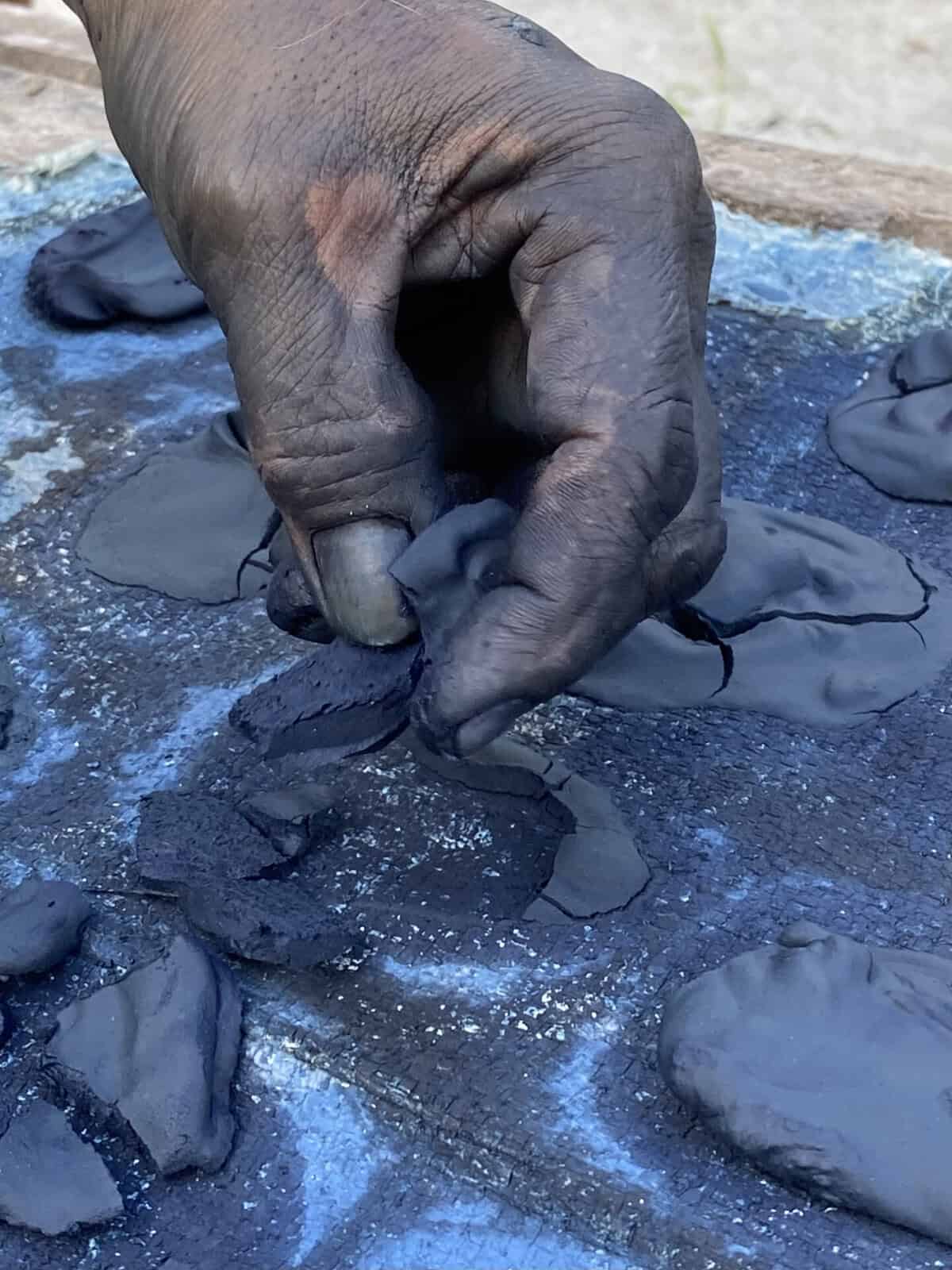
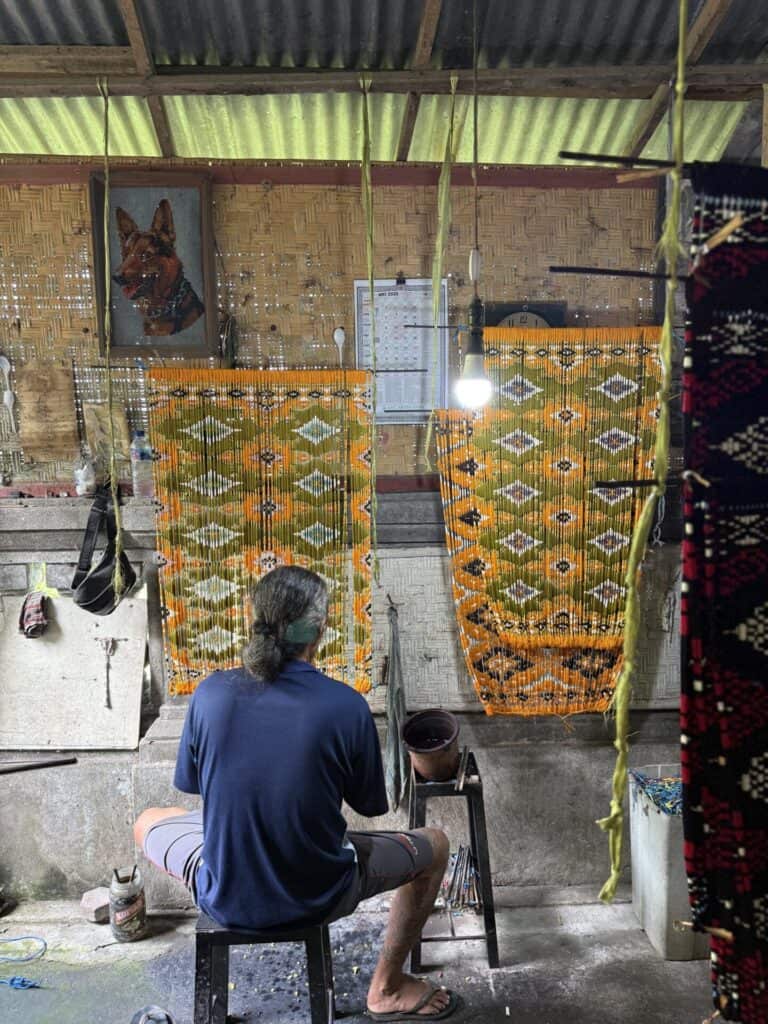
After the arrival day, there will be a day of gentle introduction to Ubud village and our environs. We will view the textiles at Threads of Life and get an introduction to the variety of textiles. Participants may take an Indonesian cooking course, or relax by the pool. A light schedule will introduce the cultures of Indonesia and our host organization, Threads of Life. Our 6 days at the Threads of Life dye studio will explore the main traditional dye processes of the Indonesian archipelago. There will be unique opportunities to participate in the processing of a Strobilanthes cusia harvest into indigo pigment and paste, and the setting and use of 600-liter indigo vats, to experience the complex oil- and metallic-mordant treatments needed to get the traditional red from Morinda citrifolia roots, to use Ceriops tagal extract for the brown color of Central Java’s batiks, and to explore the archipelago’s mud dye practices. As some of the colors take several days or even months to prepare, practice with the stages of work with these dyes will be spread over the initial days of our studio time. Alongside this will be the opportunity to learn batik, and a very special two day workshop within our studio time to learn about barkcloth from Central Sulawesi, and develop personal creative projects. For our last 3 days, we will tour the textile villages of east Bali. We will see weft ikat, songket supplementary weft cloth and ritual textiles in Sidemen; we will explore the cultural and technical complexity of Tenganan’s double ikat geringsing; and we will visit the makers of discontinuous weft rangrang in Seraya.

Testimonials
BALI
“I had a wonderful time on the trip! I’m very grateful for the experience. The people were great, the food was great, the lessons on Balinese textiles and culture were great, and the studio time was amazing.
You managed to cover everything, give us an appreciation not just for the textiles and artistry but for the lovely Bali people, their traditions, customs, culture and their country too while raising awareness of sustainable textile business!” – Guest 2025
SUMBA
ITINERARY

Meeting Eti and Her Daughters
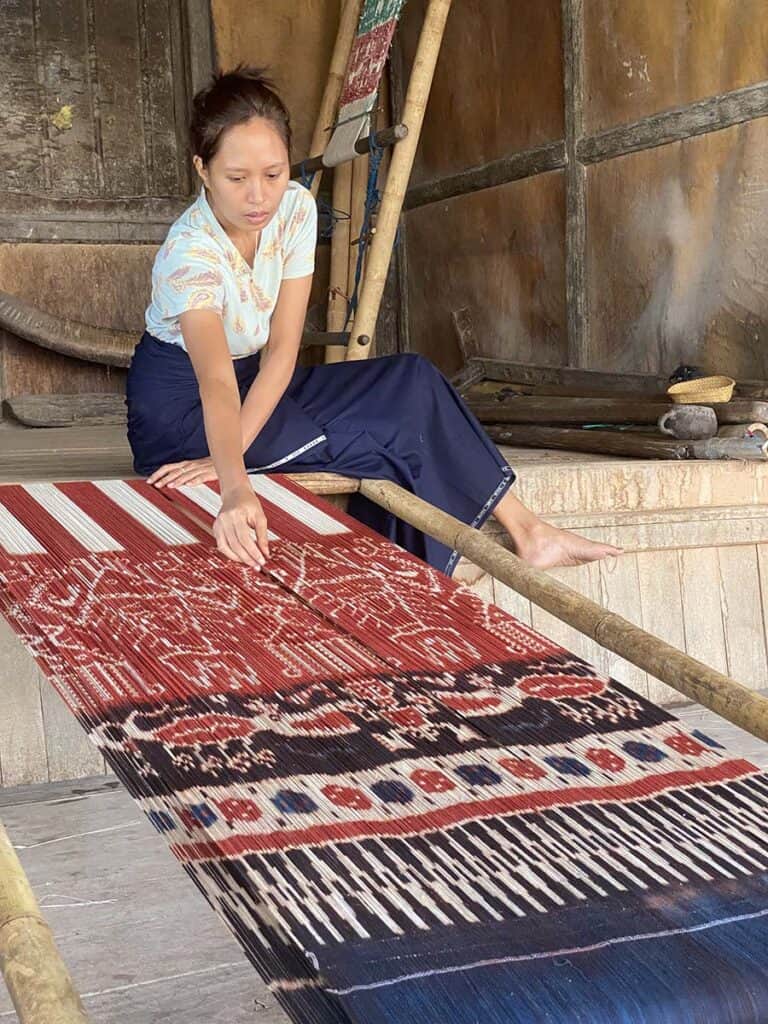
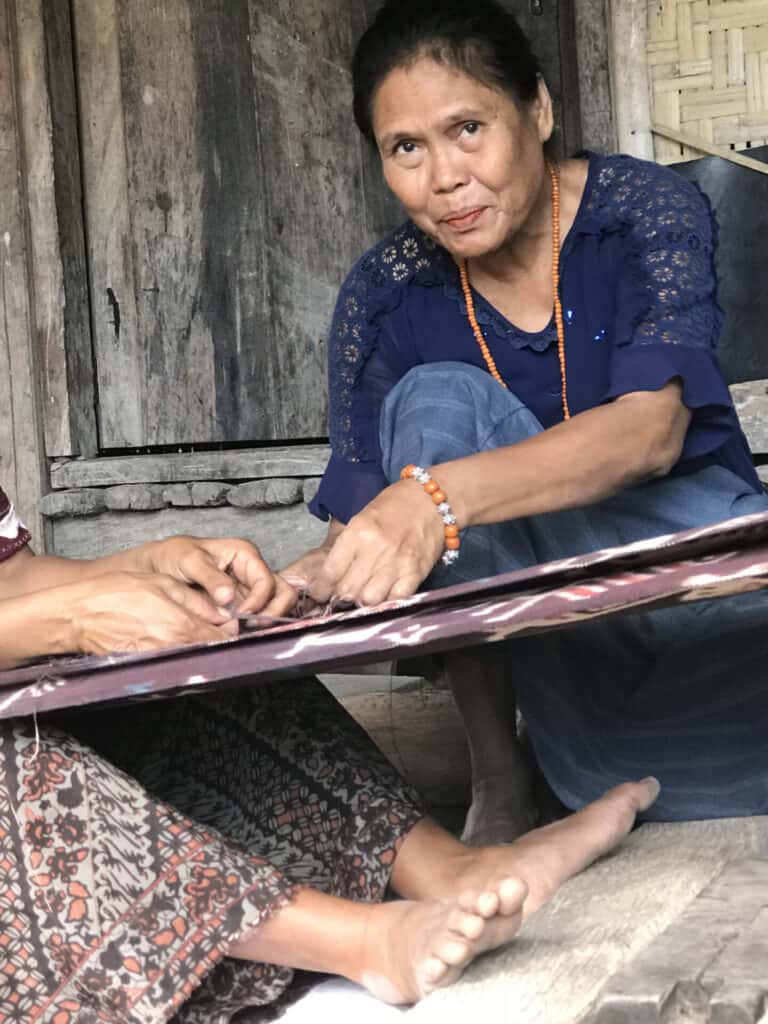
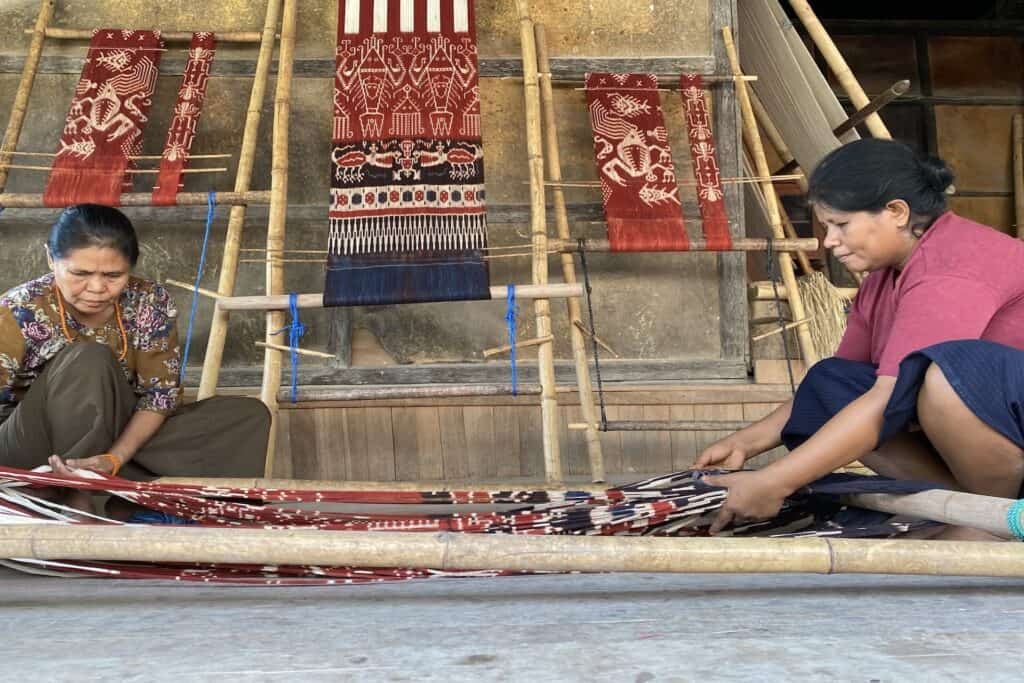
Our retreat begins in Rindi, the spiritual heart of East Sumba, where Tamu Rambu Hamu Eti — royal matriarch, teacher, and weaver — opens her home to us. Her late husband Umbu Kanabu Ndaung once led the clan; now Eti’s daughters, each educated as doctors, teachers, and economists, continue both his legacy and their mother’s weaving lineage.
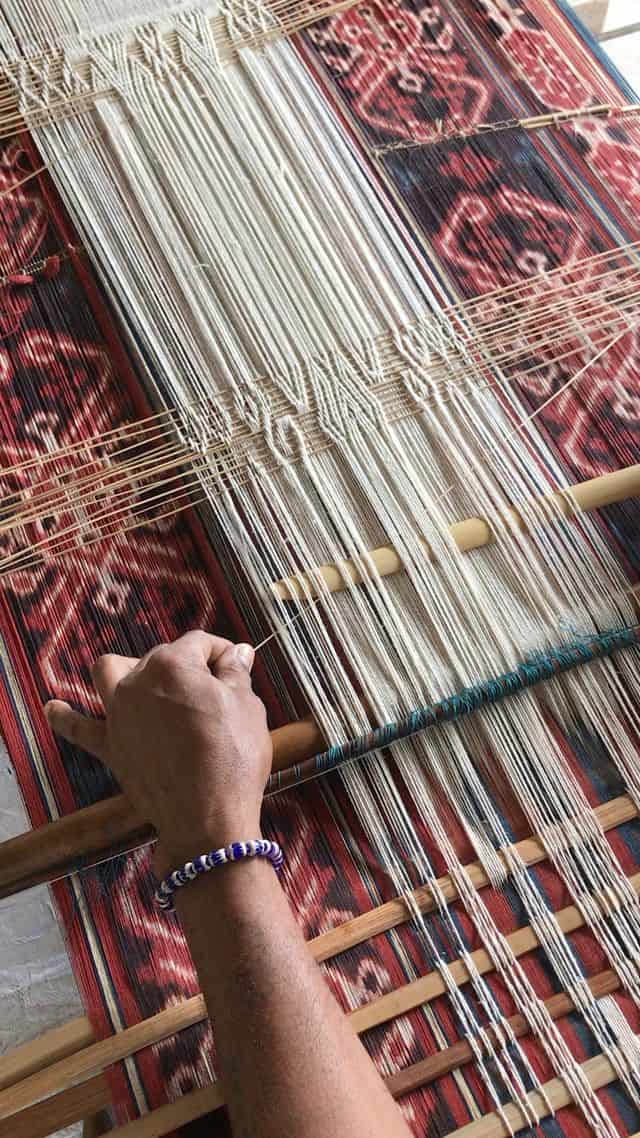
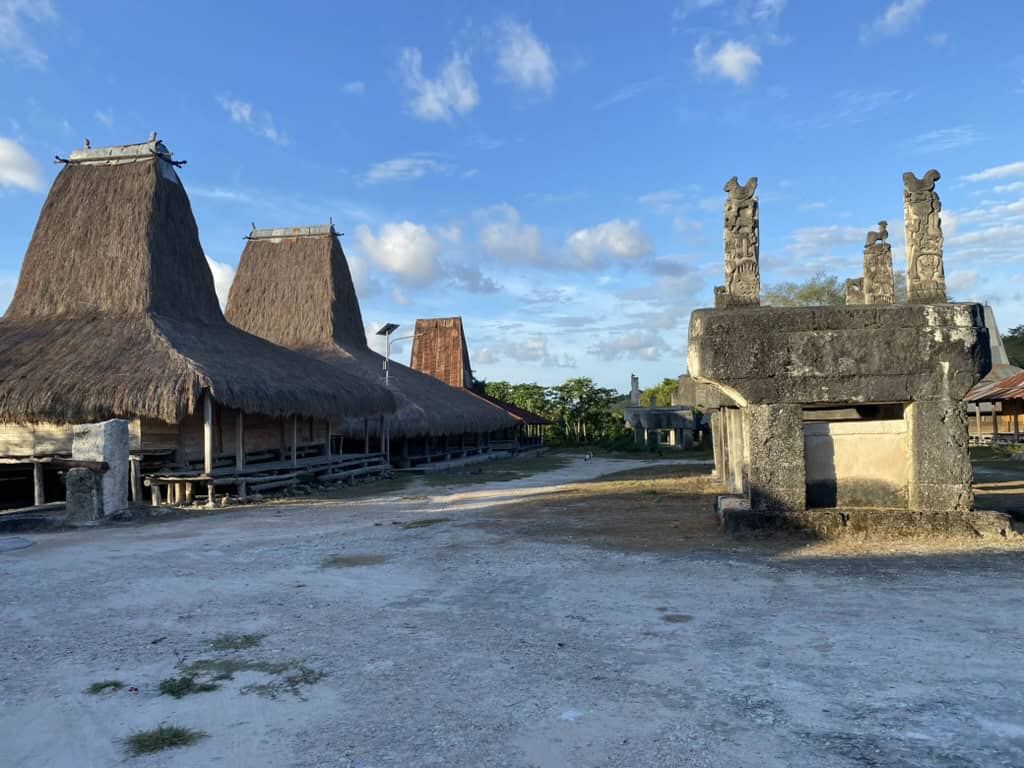
For two full days, we’ll sit beside Eti and her daughters in Parai Yawang, surrounded by ceremonial houses and ancestral graves. Here, the sound of the loom becomes a song of faith — a rhythm guided by the ancient Marapu belief system. Together, we’ll learn how loom preparation carries both technical skill and spiritual intention, anchoring us in the island’s deep sense of community.
SUMBA, Journey Through Color, Story, and Community
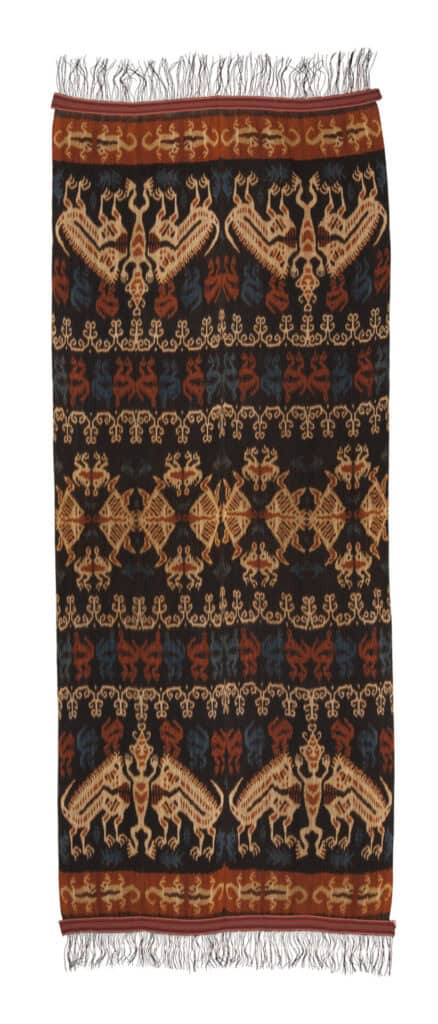
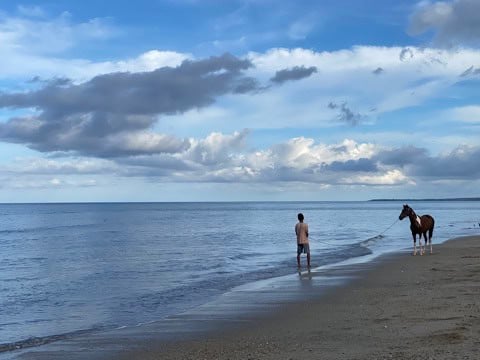
Welcome to Sumba — an island where light feels softer, time moves differently, and every fiber tells a story. Known in their own words as Ana lodu ana wulangu / ana awangu paliti — “Children of the Sun and Moon, of the Sky and Mother Earth” — the Sumbanese people carry forward an ancestral dialogue between the natural world and the human hand.
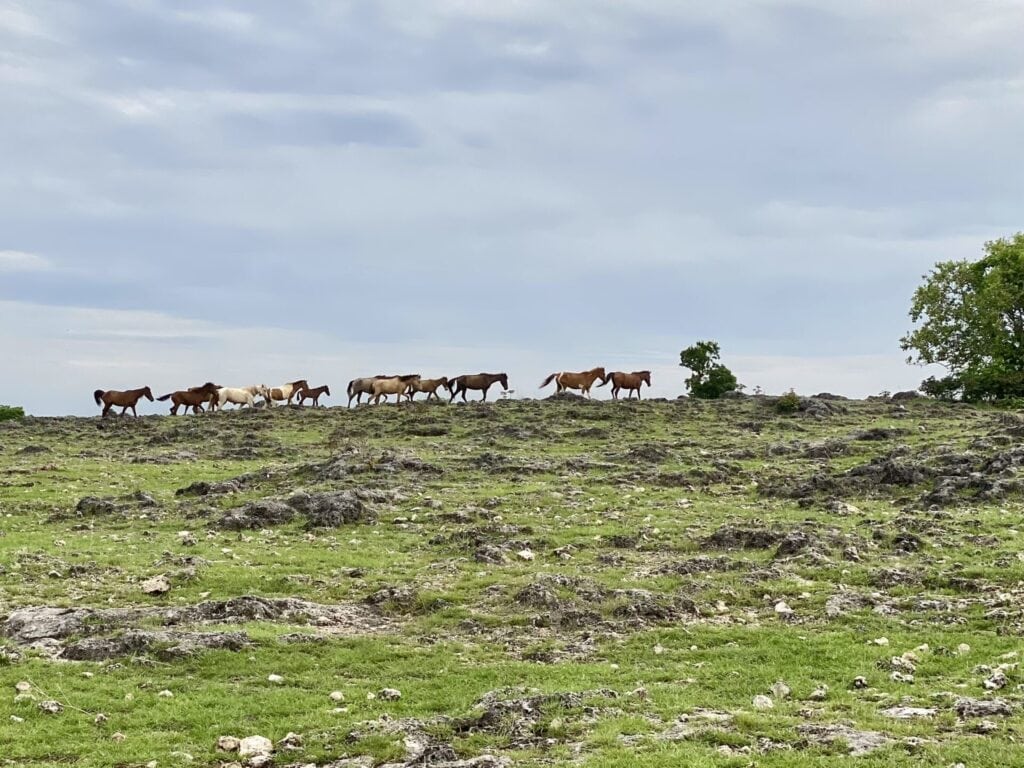
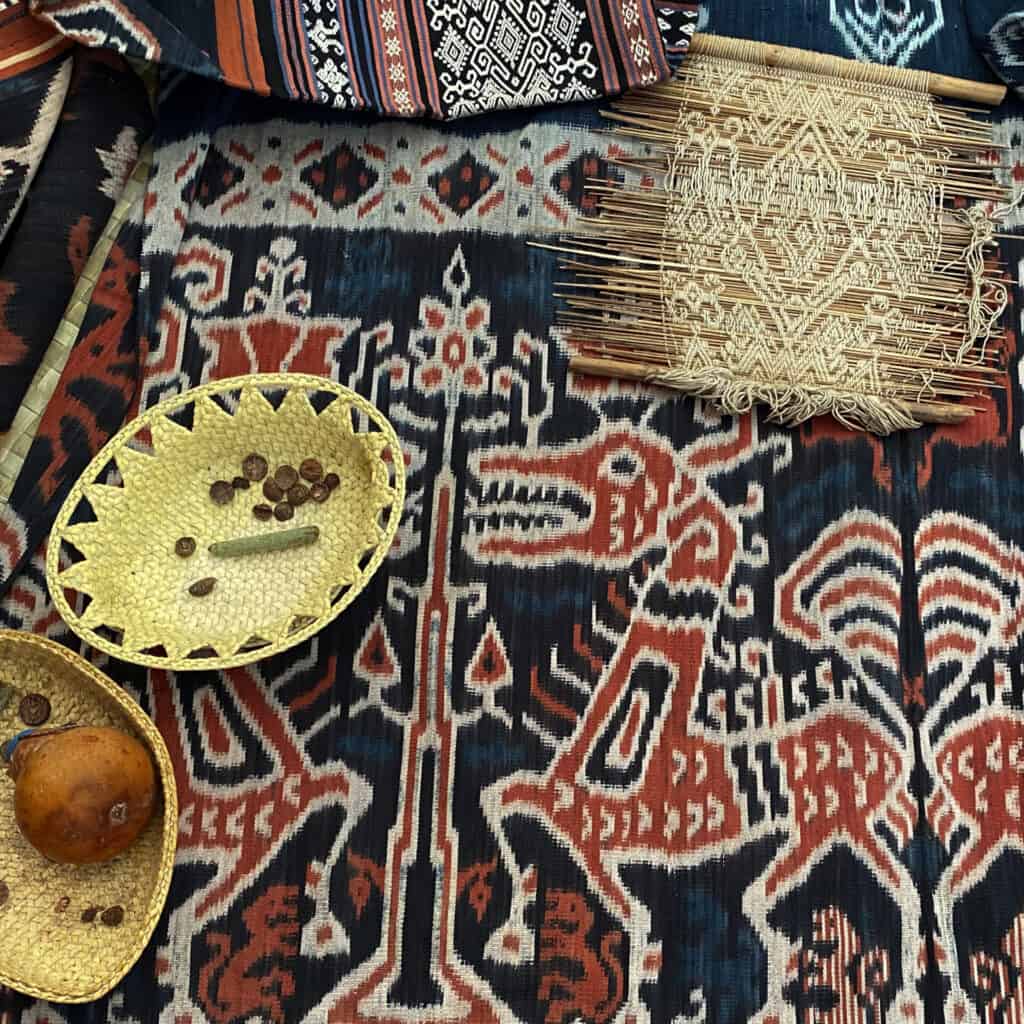
Across the island, textiles shimmer with powerful symbols: horses of the ancestors galloping through time, mythical flowers blooming with creativity, seashells recalling journeys from across the sea, and woven lobsters and crabs symbolizing neighbors working side by side. These motifs are not decorations — they are living metaphors, a language of belonging.
The Red Heart of Sumba
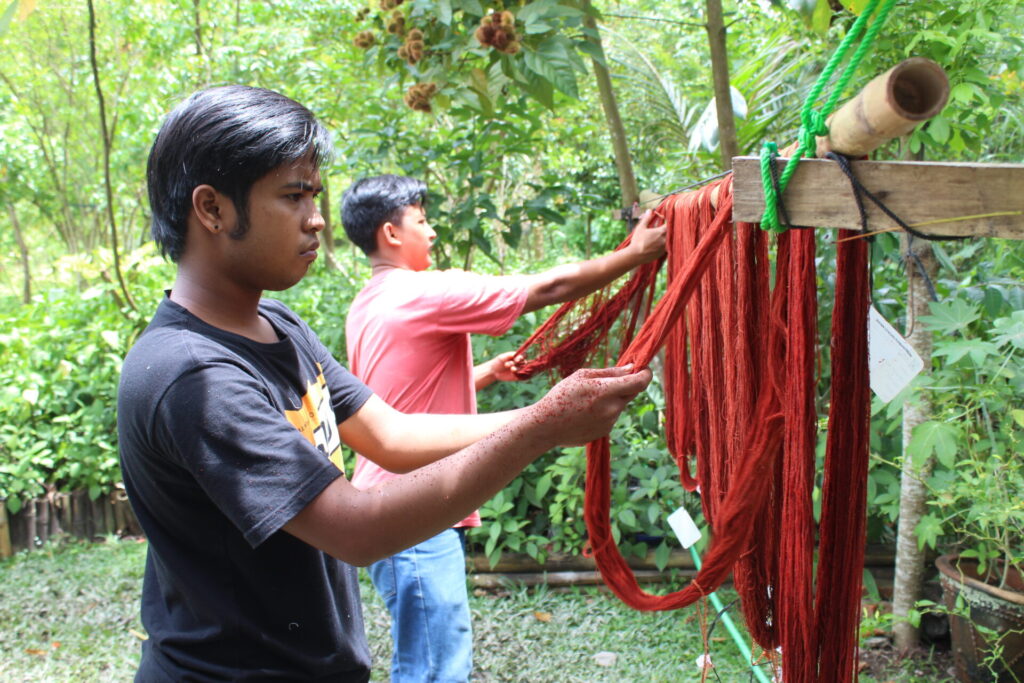
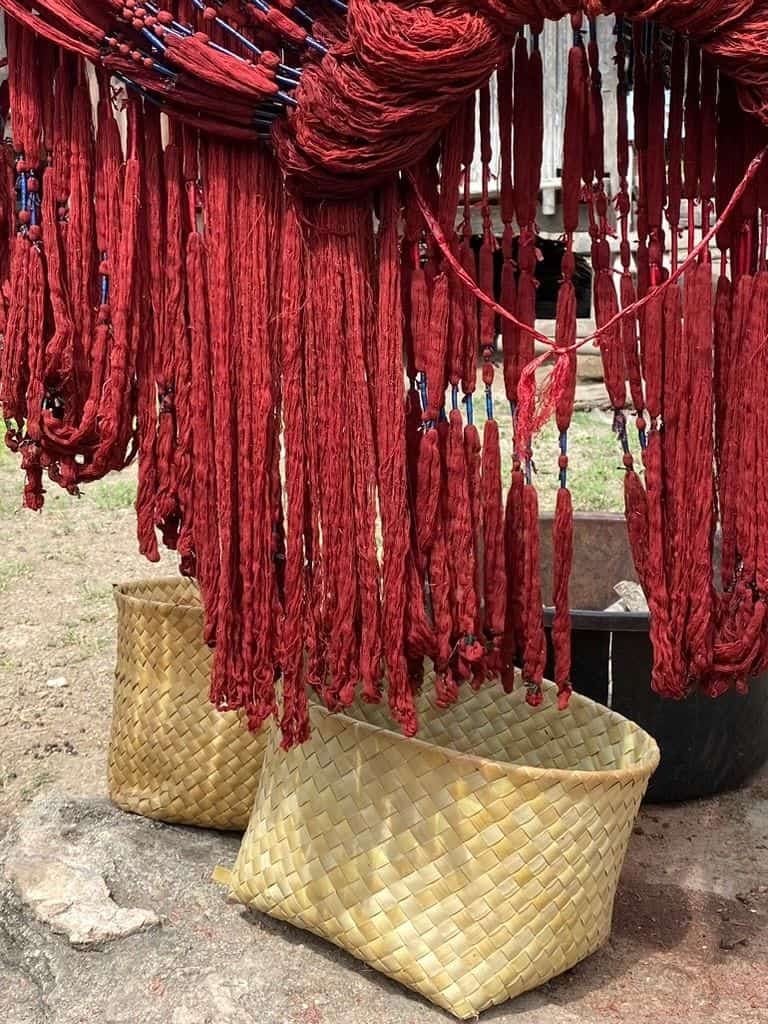
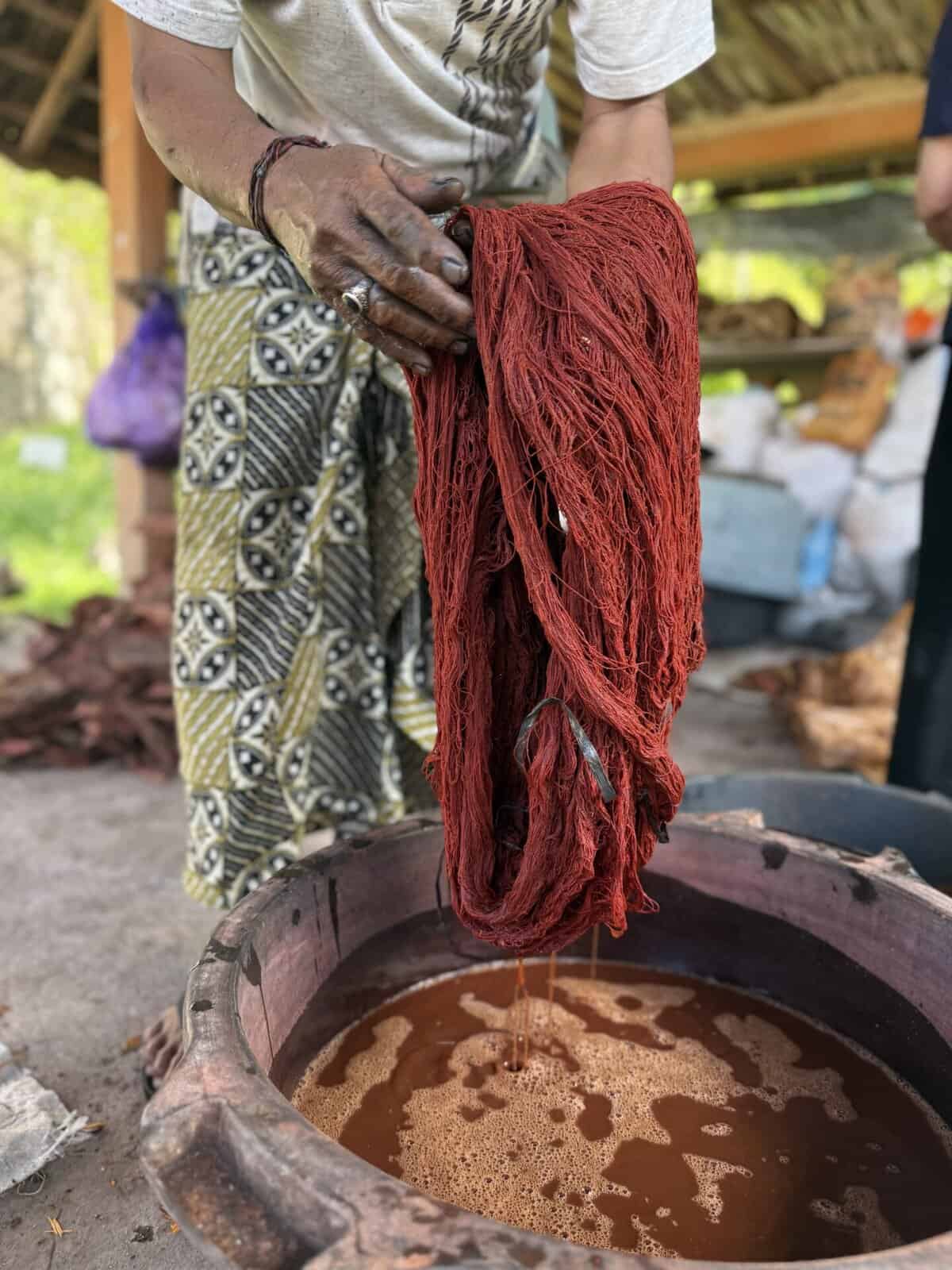
Here we’ll witness every step of the red dye process — from the careful harvesting of roots to the rhythmic soaking and folding of threads — a mesmerizing tradition that conjures the warmth of Sumba’s earth and the spirit of its people. This is the red that connects Southeast Asia: vibrant, grounded, and alive.
Few colors define Southeast Asia like its sacred red — a hue that carries centuries of reverence and ritual. We’ll travel to Kaliuda, where Rambu Meang and her husband Umbu Tokung, the young king of the region, welcome us into their dye house. Kaliuda’s rich red is coaxed from the roots of Morinda citrifolia, a tree whose dyeing secrets are passed from generation to generation.
Sculptural Baskets and Everyday Ritual
Our final days explore the woven architecture of daily life: basketry. In Parai Yawang, palm fronds become poetry. Artisans craft breathtaking three-dimensional baskets shaped like chickens — ndabi ri and ndabi wai — that rise from the long fronds of seventy-year-old lontar palms. Their golden structure protects rice or soup, yet also represents care, containment, and continuity.
We’ll visit Tamu Rambu Mei, a master basket maker whose sculptural works blur the line between ritual object and contemporary art. Her creations echo the strength of women’s hands that have, for generations, shaped Sumba’s cultural heartbeat.
A Journey Between Ancestors and Artistry
Each day of this retreat invites participation, not observation: to sit, listen, dye, weave, and share. From the glowing reds of Kaliuda to the cool blues of Pau, from the sculpted palm fronds to stories told at dusk, we’ll move through Sumba with open hearts — guided by community, color, and connection.
It’s not just a travel experience; it’s a passage into the living artistry of Southeast Asia — a journey dyed in red, washed in indigo, and held together by friendship across cultures.
WHY BOTH
“Two Journeys, One Story of Color”
If Bali opens the door to Indonesia’s world of natural color, then Sumba invites you to step through it completely. After reading both itineraries, it’s easy to see how the two journeys mirror and deepen one another — Bali offering hands-on discovery and creative play in the Threads of Life studio, and Sumba revealing how those same dyes and weaves are embedded in ancestral wisdom, daily ritual, and living heritage. Together, these experiences form a continuous thread — from the indigo vats and batik tables of Ubud to the red dye roots of Kaliuda and the sculptural baskets of Parai Yawang. One trip strengthens your craft; the other awakens your connection to community and story. For travelers who join both, it’s not only a savings of **$1,000**, but a truly rare opportunity to experience Indonesia’s artistry from seed to fiber, from studio to spirit.
What our Retreat participants are saying
TANGIER
I came as a beginner and learned so much. I have so much more to aspire to, and the workshop gave me the knowledge to move forward.
I loved this trip! I learned a lot, loved spending 10 days dyeing and learning from Cara, and loved the setting!
OAXACA
Thank you for the warm and incredible immersion into culture, color and amazing people. I truly loved the care and thought you put into this experience and the diversity of workshops and visits with exceptional artists.
The experience has been so unique and will be treasured forever!
What is included in the Tour Price
- Your accommodation
- All studio lunches
- Breakfasts at the hotels
- Studio time
- Studio Materials
- Transportation to all of the excursions
Not included in the Tour Price
- Airfare
- Passport and visa costs
- Alcohol
- Meals not listed
- Luggage charges
- Tips or gratuities
- Insurance of any kind
- Laundry, incidentals
- Companion pricing
- Additional days travel before or after our tour (please let us know if we can help make arrangements)
TERMS AND CONDITIONS
We require traveler’s medical insurance including medical treatment, transportation, evacuation/repatriation to participate in our tour. We also strongly recommend you purchase trip cancellation and interruption insurance for unforeseen events.
MEET YOUR TOUR GUIDES
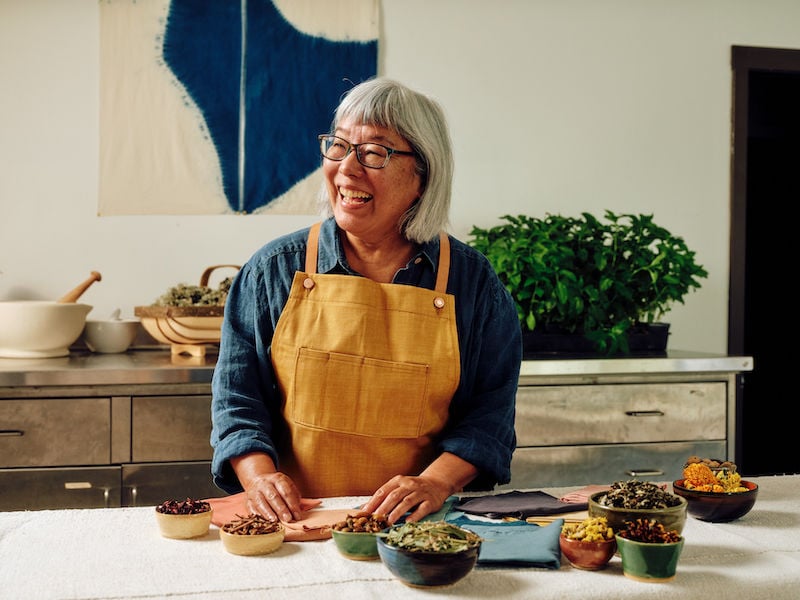
Kathy Hattori
President of Botanical Colors
Kathy Hattori is a recognized authority on natural dyes, pigments, and commercial applications of natural dyes and has worked in the field since 2003. She developed numerous commercial processes using natural dye extracts in the industrial textile environment. She consults and advises brands and retailers on their natural dye implementation strategies and has worked with the largest natural dye houses in the US.
Her experience includes creating a natural dye program for the largest organically certified tannery in Europe, presenting papers at international textile conferences and supporting clients such as Eileen Fisher and other sustainable brands. Kathy teaches and lectures about natural dyes and is sought after as a speaker about the status of natural dyes in global textile production.

Cara Piazza
Creative Director of Botanical Colors
Cara Marie Piazza is a natural dyer and artisan working in New York City.
She creates one of a kind textiles only using natural dye stuffs such as botanicals, plant matter, minerals, non-toxic metals and food waste. She treats her fabrics through alchemical dye sessions, ancient shibori techniques and bundle dyeing, transforming each textile into its very own story. She works with both designers and artists to realize their natural dyeing needs as well as creates custom pieces for private clients.
Cara teaches workshops on natural dyeing and curates unique experiences merging healing, color and art.
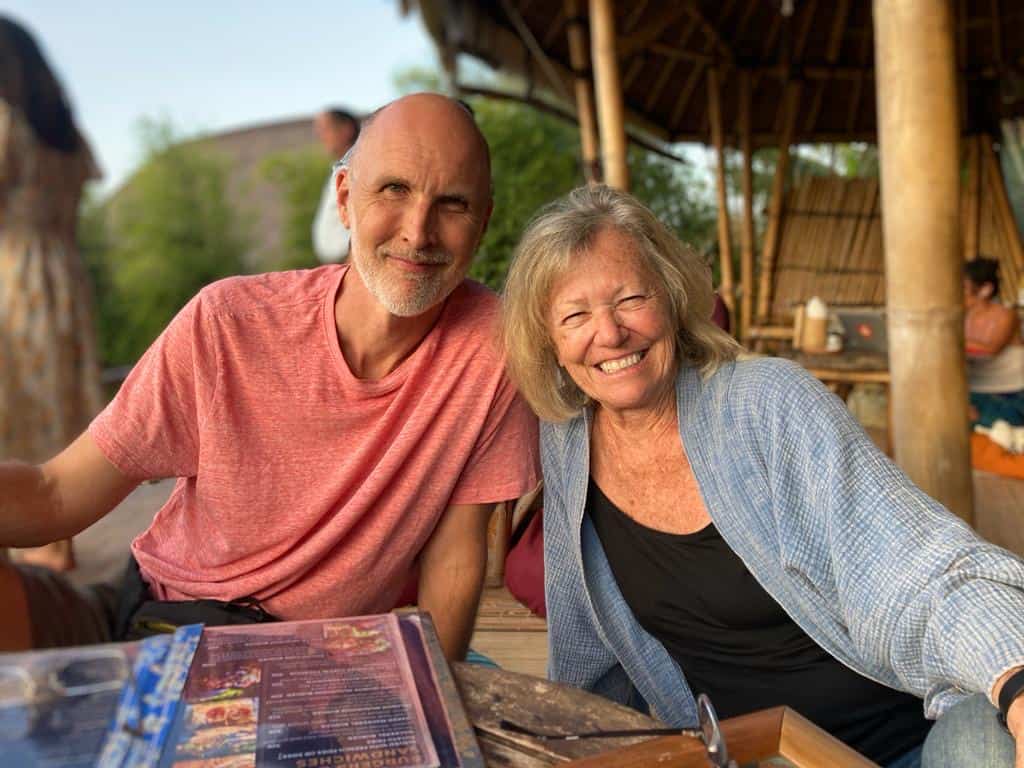
Jean Howe & William Ingram
Co – Founder Threads of Life
William Ingram and Jean Howe are co-founders of Threads of Life, a Bali-based social enterprise that has worked with over 1000 traditional weavers and their families in 50 communities on 12 Indonesian islands since 1997. Jean’s work has focused on the intangible culture embodied in Indonesia’s textile arts and, through handling thousands of the highest quality traditional textiles, she has developed a deep knowledge of the archipelago’s textile arts. As director of Threads of Life’s sister nonprofit, the Bebali Foundation, since 2002, William has led the organization’s support for sustainable cultivation and use of natural dyes by these same communities. He is author of “A Little Bit One O’clock: Living with a Balinese family”
READY TO BOOK?
Spruce up your plants with our delightful ceramic pots, lovingly crafted to bring joy to your indoor and outdoor spaces.