Woad Workshop and Master Class with Denise Lambert

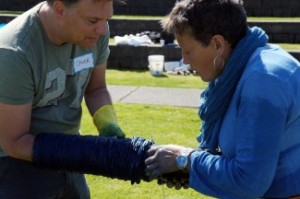
Join us for a very special workshop this Fall in Seattle! Learn the ancient art of Woad dyeing from master dyer Denise Simeon Lambert, founder of Bleu de Lectoure in southwest France. Denise’s passion for traditional French Blue revitalized woad dyeing and cultivation in France and brought back the medieval techniques of the traditional woad vat, modernizing it for current day use. Denise will be joining us from Lectoure France and this promises to be a very special class. For our workshop, we will be gathering at Magnuson Park and setting up our woad vats outside in the Garden Amphitheater.  … Read more

Make An Easy, Organic Indigo Vat

In 2009 and 2010 I had the opportunity to study with natural dye master Michel Garcia.  He is a marvelous and knowledgeable teacher,  fascinated with using the chemistry of simple ingredients to create natural colors.  One of the things that he demonstrated to us was to be fearless about the indigo fermentation vat.  What a gift!  For me, the indigo fermentation vat has always been a mystery and I could never quite figure out all the details so I never pursued it.  I was getting great and consistent color with my lye and soda ash and chemical reducing agents, so why … Read more

Gone Woading

This past May, Botanical Colors was honored to host woad master Denise Lambert of Bleu de Lectoure for a weekend of woad dipping using the ancient blue dye of Europe that she and her husband revitalized in France.  She brought her charming assistant, Sophie Boss and they worked their woad magic in Seattle. We started our woad adventure in my studio, measuring, stirring and a bit of praying.  Seventeen mother vats for Saturday and 15 for Sunday. Once the vats were mixed, we left them overnight to rest.   What a time it was woading!  We started early in the … Read more

I’m the guest blogger for Cotton Clouds this month

I’m the guest blogger for the month at Cotton Clouds. Check out their new EZ Dye kits using a non-toxic pretreated cotton that takes natural dyes beautifully with no mordanting! The colors are so interesting – a slightly different palette than other natural dyes on cotton – these tones will go beautifully with most interior colors.  The toothy cotton yarn is perfect for weaving 6 generously sized table napkins that are ideal for summertime picnics or casual dining. Check out the EZ Dye Cotton kit on the Cotton Clouds website.  It’s a fun and easy project!

Earth Day is April 22

1969, the Cuyahoga River in Cleveland caught fire. Although it wasn’t the first time the river burned, it became the symbol of the desperate condition of American waterways choked by pollution and spurred the passage of the Clean Water Act. A year later, 20 million Americans rallied on April 22 – the first Earth Day and the birth of the present day environmental movement. 42 years later, the environmental challenges are great, but we have many opportunities to take action. Here is the statement from the Earth Day website For Earth Day 2012 we are mobilizing the planet simply to … Read more

Tips For Using Less Water & Energy to Get Color

Here are some simple tips to help you use less water and energy to get the colors you want: 1.  Try some of the innovative dye techniques as practiced by India Flint and Kimberly Baxter Packwood. Both these artists create using low-water and low resource methods that yield surprising and very beautiful results. Each has developed her method of eco-dyeing using windfall and waste materials and the pieces they produce are evocative of the spirit of a leaf or the wild meanderings of decomposing plant matter. 2.  Take up fabric or yarn painting with natural dyes. You use  less water … Read more

2012: The Year of More Color

How is it that we can look at a washing machine that is Harvest Gold and instantly date it to the 70’s?  Or say “Santa Fe colors” and know that we’re speaking of a greenish teal, terra cotta, sage green and mauve?  The answer is color forecasting.  Each year a number of color experts meet (there are many forecasting organizations) and discuss the direction that colors are taking based on their observations of popular culture, political and economic climates and emerging trends. Out of these meetings come color forecasts which help guide colors for interiors, consumer goods, fashion and cosmetics.   … Read more

Tips For Pokeberry Dyeing on Wool

We’re pretty obsessed with pokeberry dyeing right now for dyeing wool, making ink and just squishing them up and dropping them on paper. They are SO intense and exciting to use. I visited Japanese textile artist and katazome instructor John Marshall in his studio in Covelo, Mendocino County and was surprised to see that his entire front yard was covered in pokeberry bushes. Although pokeberries are native to most of the the United States, I had never even heard of them and was browsing through Rebecca Burgess’ book Harvesting Color on natural dyes when I spotted a beautiful red skein … Read more

Hints & Tips for Natural Dyers: How to Minimize Indigo Crocking

1. It’s supposed to rub off. That’s why blue jeans fade. 2. Certain cultures attribute indigo crocking to its authenticity and prize the way that excess indigo comes off on the hands or body. I found a description from Duncan Clarke  of Adire African Textiles on how West African cultures dye and prepare indigo cloth: “After the dyed cloth had dried it was customary to beat the fabric repeatedly with wooden beaters, which both pressed the fabric and imparted a shiny glaze. In some areas additional indigo paste was beaten into the cloth at this stage, subsequently rubbing off on … Read more

A Perfect Red: A Story of Cochineal

A Perfect Red is a marvelous story about the history of the “discovery” of cochineal by Europe in the 16th century. The tiny  scale insect is one of the most compelling red colors in the natural dye palette and its introduction took Europe by a storm, garnering huge fortunes for Spain and England (who pirated tons of cochineal bounty from Spain).  Author Amy Butler Greenfield details the challenges that it took to bring this dyestuff to market from the fall of the Aztec empire to Perkin’s discovery of mauve.  Her 300-page book reads like a natural dye bodice-ripping historical romance … Read more