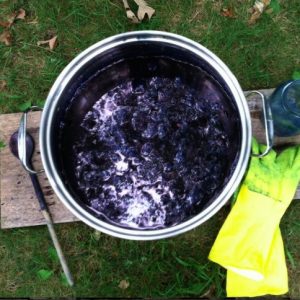
Henna and Iron 1-2-3 vats for FEEDBACK FRIDAY

Each week, we are emailed with questions from our natural dye community asking simple and complex questions that we thought might be worth sharing. Here are a handful from this week answered by natural dyer in chief, Kathy Hattori, Founder of Botanical Colors: I’ve used henna in a 1-2-3 vat and love it but would like to get darker colors without redipping if possible. Is your recipe for the iron and henna online? We get very dark colors from henna but it is always through multiple dips.  Do note that henna vats are stronger after several days of “ripening.” Indigo … Read more

For Fashion Revolution Day Ask #whomademycolor?

Yearly on April 24th, Fashion Revolution brings everyone in the fashion value chain together to help raise awareness of the true cost of fashion, show the world that change is possible, and celebrate all those involved in creating a more sustainable future. As part of Fashion Revolution Day, which over the years has evolved into a suggested daily mantra to ask #whomademyclothes? we are asking a new question: #whomademycolor? With waterways being polluted worldwide from the fashion industry and consumers literally wearing toxic clothing, we think it’s time to cast a big spotlight on how color gets on the things … Read more

Natural Dye Technique Questions for FEEDBACK FRIDAY

Image: Honest Alchemy Each week, we are emailed with questions from our natural dye community asking simple and complex questions that we thought might be worth sharing. Here are a handful from this week answered by natural dyer in chief, Kathy Hattori, Founder of Botanical Colors: I am dyeing logwood on wool and only getting a brown color-what is happening? The rich purple color from logwood can be affected by cream of tartar. If you normally mordant with cream of tartar, try omitting it in the mordant process. You may also enhance logwood by adding a pinch (less than 1/8th … Read more

An Interview With Textile and Shibori Guru Joan Morris

Internationally acclaimed textile and shibori guru Joan Morris last visited us in 2015 and we are pleased to welcome her back to teach with Botanical Colors this July. Shaped-resist dyeing is an elemental textile art that is thousands of years old. In Japan it’s known as shibori, but it has been made worldwide for almost as long as dyes have been applied to textiles. Joan’s history with natural dyeing and textiles is extensive so we are lucky to catch her for an interview. Here’s what she had to say about the history of shibori, popular techniques and the best advice … Read more

blue yarn over an indigo vat in a white bucket

3 Tips to Lower Water Use When Natural Dyeing

Growing Blue reports that 2.5 billion people (36% of the world population) live in water-scarce regions and more than 20% of the global GDP is already produced in risky, water-stressed areas. Given today’s accelerated pace of human development and the slow pace of managing issues as complex as water resources, tomorrow’s challenges are already at our door. For this year’s Water Quality Month, whether individual, collective, agriculturally focused or industrially inclined, addressing water scarcity begins with you. We’ll call it (cough) the ripple effect. While you work on some possible real-life scenarios for making change, we’ve created 3 tips to … Read more

Some of the Best Quilting Cotton Was Hand-Dyed in Japan Thirty Years Ago

Okan Arts imports vintage Japanese yukata cottons for adventuresome quilters. Okan Arts, owned by textile and natural dye artist Patricia Belyea, is a home-based shop in Seattle, bursting with over 1,000 bolts of vintage Japanese cotton. Hand-dyed by artisans in Japan from 20 to 50 years ago, the cottons radiate luscious colors and a graphic boldness. Simple cousins to the gold-enhanced reproductions of kimono silks typically found in quilt shops, these yukata cottons were made for casual unlined summer kimonos. “The summers are hot in humid in Japan so breezy, light kimonos made of cotton are perfect. Silk kimonos are … Read more

A Pantone Inspired Airbnb Fit For Color Enthusiasts

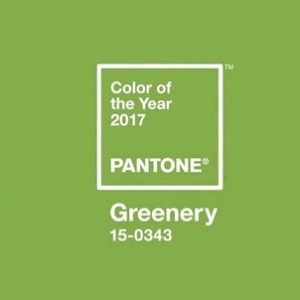
We haven’t acknowledged the Pantone color of the year enough so we’re glad to see others who are and in the most fun of applications. Stay tuned for a natural dye recipe we’ll be creating soon where you can achieve this color for your own design projects. According to Dezeen, “Pantone has collaborated with Airbnb to fill a London home with planting and projects that match its verdant 2017 colour of the year. “Pantone had announced the tone which it describes as a “tangy yellow-green”, as its pick for colour of the year in Decembe 2016. The annual selection is … Read more

Natural Dyes, Celestial Maps and Technology Partner for Exhibit

We love when natural dyes and technology come together and when it also involves celestial maps? Well, let’s just say some collaborations are a lot cooler than others. The Creator’s Project is one of our favorite daily reads and they write this: “Those in the northern hemisphere know that the North Star, Polaris, is a useful tool of navigation. But few know that, because of changes in Earth’s axial rotation, Polaris hasn’t always been—nor will it remain—the North Star. This lies at the heart of a new exhibition titled Deep Future, which features robotically-drawn celestial maps of what the North … Read more

Indigo Shibori Kit

This Indigo DIY Dye Project Will Spice Up Any Holiday Table

Image: Kate Miss for Bust Magazine Bust Magazine writes: “The fabric-dye trend is everywhere right now; people are going crazy for tie-dyeing, immersion dyeing, natural dyeing, and of course, shibori. The last one is often mistaken as tie-dye, but it’s actually in a category of its own. Shibori is a Japanese method in which fabric is made into a three-dimensional form via binding, folding, twisting, stitching, plucking, and plaiting; then it’s dipped into indigo dye. You can use any piece of fabric with this technique, but we’ll show you how to create your own shibori table runner and napkins.” Read … Read more