Organic Indigo

Organic Indigo

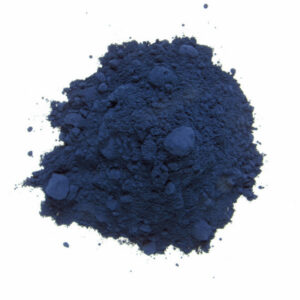
Organic indigo is a powder from the leaves of the indigo plant called Indigofera tinctoria. It is one of the oldest dyes known to humankind. It is also the only natural blue dye. Its colorant is present in other plants including woad (Isatis tinctoria) and Japanese indigo (Persicaria tinctoria), a buckwheat. Additionally, it is present in Strobilanthes cusia, a distant cousin to the ornamental Persian Shield that you can buy at Home Depot. Indigo pigment was used to dye shrouds for Egyptian burials, uniforms for Napoleon’s Army and has also been used to dye prestige cloth for African chiefs and … Read more

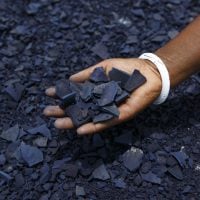
Woman's hand with white bracelet holding a handful of indigo chips on a dark blue background of more indigo chips

Organic Indigo from Living Blue

Organic Indigo from Living Blue We are proud to offer a beautiful organic powdered indigo from Living Blue, from one of the great historical indigo-producing centers located in Bangladesh (formerly Bengal). This superior indigo comes to us from an organization called Living Blue. We offer Living Blue’s indigo in 100g and 250g packages. It creates a very rich and dark vat. In addition, the purchase of this product supports farmers and craft workers in Bangladesh. Established in 2008, Living Blue empowers farmers and artisans through the cultivation and use of native Indigofera tinctoria. Living Blue provides seed, land access and … Read more

Ajrak Bandanas in Indigo, Madder and Iron

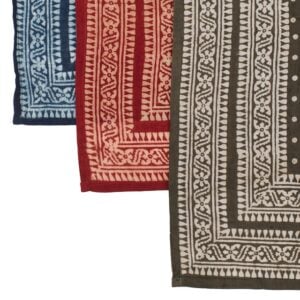
Ajrak Bandanas in Indigo, Madder and Iron Ajrak is the name for the intricate resist patterning that makes these pieces instantly recognizable as originating in Pakistan and parts of India. We are thrilled to offer these beautiful Ajrak bandanas in classic natural dye colors:  indigo blue, madder red, and iron gray.  The bandanas are the creation of Handwork Studio, a Toronto-based design group with artisan production connections in Pakistan, Nepal, Haiti, India and Peru. Handwork Studio is committed to design innovation through socially and environmentally sustainable methods. The bandanas are hand-printed and naturally dyed in the historic Sindh Valley, Pakistan … Read more

Aquarelle Liquid Indigo - Saxon Blue

Aquarelle Liquid Indigo – Saxon Blue

Aquarelle Liquid Indigo – Saxon Blue The legendary Aquarelle Liquid Indigo – Saxon Blue is now available to natural dyers. First created in Germany in the 1740s, it is made from natural indigo converted with a strong acid to mimic an acid-type dye. It is not a vat dye and you do not use it like vatted indigo. It is an easy and marvelous color for wool fibers. Saxon blue is greener than traditional vatted indigo. In addition, it is a great base for teal, aqua, cornflower, periwinkle, lilac and medium value purple. To use, simply measure out the amount … Read more

On Sale! Vibrant Valley Blue Indigo Paste

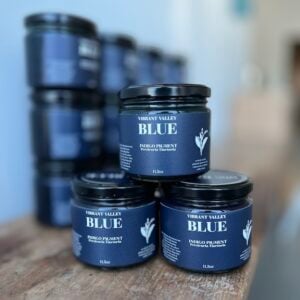
On Sale! Vibrant Valley Blue Indigo Paste We are thrilled to introduce a new, Pacific Northwest-based indigo paste from the incredible growers and dyers at Vibrant Valley Farm.  Kara Gilbert and her skilled team created Vibrant Valley Blue, a Persicaria tinctoria indigo extract. This product is based on years of growing, harvesting and experimenting with varieties, cultivation and extraction and they’ve scaled their production from a few hundred starts to a robust crop of over 10,000 plants.  The resulting indigo paste is easy to use and creates a beautiful clear blue.  Kara used this indigo to dye a number of … Read more

The Easy 1-2-3 Fructose Indigo Kit

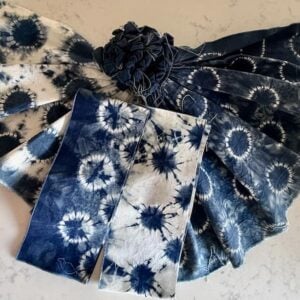
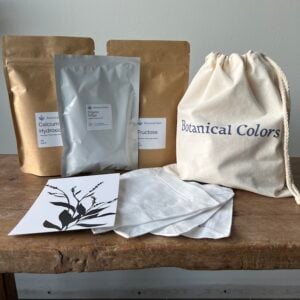
The Easy 1-2-3 Fructose Indigo Kit The 1-2-3 fructose indigo vat is one of our most popular vats for its ease of use and good, strong colors. We made things easy to start your new indigo adventure with this kit that has enough pre-measured indigo and auxiliaries to make a rich vat in a 5-gallon bucket. We’re also including 4 22 inch cotton bandanas that you can dip. The bundle is packaged in an organic cotton bag, that can also be dyed! Experiment with gradation dyeing, shibori, or get into the indigo master groove and dip a piece of fabric … Read more

Indigo Instructions

Our indigo instructions originally used a recipe based on Michel Garcia’s 1-2-3 vat, created nearly 10 years ago. Since then, we’ve made some changes and developed different recipes that will allow you to control how light or dark your vat is. Types of Vats: There are three main types of vats that you can build. Use the indigo instructions below to decide which one is best for you.  Vat type About Advantages Disadvantages Fructose Clearest blue Dyes lighter than henna or iron Seems to perform best when aged for 2-3 days, and when warmed before use. Henna Warmest blue/yellow cast … Read more

Mordant Monday: Overdyeing: Indigo First, or Indigo Second?

We get mordant questions all the time at Botanical Colors so why not create Mordant Monday??? Got mordanting questions? Email [email protected] YOU ASKED: Do you always dye indigo first before overdyeing with another color? Does it make any difference? KATHY ANSWERED: When I was starting out, I was advised to dye with indigo first, rinse, mordant my fabric, and then dye with a mordant color second in order to create any type of compound color when indigo is involved. We largely agree with this as most of our production colors start with an indigo shade that we dip. We seem … Read more

How to Dye with Fresh Indigo

A beautiful blue with ice water and just-picked indigo leaves Our thanks to John Marshall for this easy recipe on how to dye with fresh indigo! One of the delights of growing your own Japanese indigo is making fresh indigo leaf baths and dipping for that beautiful and elusive slightly turquoise shade. What makes it even more special is that it works great on silk, and the fabric really shows off the color. For this process you will need: Instructions You will need a generous armful of indigo stalks to dye a few silk scarves or yarns. Wool will also dye beautifully with fresh … Read more

Hide Glue Indigo Vat Instructions

These instructions will help you understand how to use hide glue in an indigo vat. Hide glue is a protein based adhesive used in fine woodworking and antique restoration and for thousands of years was the most common woodworking glue until the invention of polyvinyl acetate and resin glues in the 20th century. It is made from animal skins, bones and connective tissue and is a tenacious adhesive yet also water soluble and non toxic and not hazardous. Artists use rabbit skin glue to size canvases.  People also use it in bookbinding and to prepare certain art mediums. For textile … Read more