MORDANT MONDAY: Mordanting To Make Green

We get mordant questions all the time at Botanical Colors so why not create Mordant Monday??? Got mordanting questions? Email [email protected] YOU ASKED: I just ordered both logwood and weld and want to get purple and green on wool yarn based on this information on your site. Do I need to do some pre-mordanting with alum? The website has the intriguing recommendation to use a bit of soda ash with neutral water, to get a better purple. Does this mean an acid pre-mordant would not be advised? It’s hand spun wool for warp so would be better slightly acidic rather than … Read more
Mordant Monday: Middle Mordant in Toronto

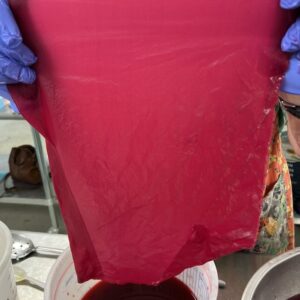
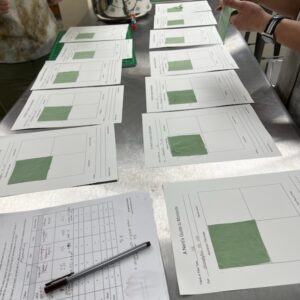
Thank you to Rachel MacHenry and Gitte Hansen of Contemporary Textile Studio Co-operative for the lovely photos! I taught a one day workshop on middle mordant using Japanese dyes in Toronto on Friday, and had a great time with the students. This was the first time we’d tried the technique using only Japanese dyes that we extracted, and we also had a side trip into kakishibu which didn’t require any mordant, but made a beautiful shade. I’ve written about middle mordanting before: Catharine Ellis has a nice recipe and procedure in her book and Studio Notes, and I’ve also seen … Read more

Mordant Monday: Middle Mordant Magic

In this week’s Mordant Monday, we discuss Middle Mordant. Middle Mordant is a technique that I learned about from The Art and Science of Natural Dyes. It’s considered to be a Japanese technique and is a simple way to create rich color on silk. Middle mordant uses room temperature dye baths and you can repeat the process until the fabric is the color you want. The purpose of middle mordant is to deepen the depth of shade and most of the examples I’ve seen use silk fabric and alum mordant. There are somewhat similar techniques that old dye books discuss, … Read more

Mordant Monday: A NERD’S GUIDE TO MORDANTS

A Nerd’s Guide to Mordants Kathy is currently creating magic at Sanborn Mills for her Nerd’s Guide to Mordants workshop. We decided to give you a little taste into all of the beautiful mordant variations she is creating for this workshop and some of the key considerations you should take into account when beginning to mordant. For all of you budding mordant nerds out there, here are some highlights of what is covered during the class. We are working on bringing this class to you in online form, so here is a little teaser while you wait! What is a … Read more

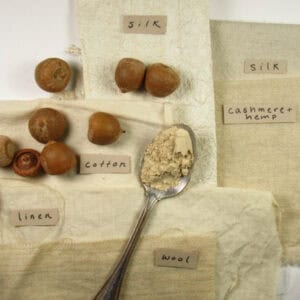
acorns and a spoon of tan powder on pale fabrics

MORDANT MONDAY: Which Plants Need Mordant?

We get mordant questions all the time at Botanical Colors so why not create Mordant Monday??? You Asked: I keep getting mixed answers from people about dyeing with plants from my yard and whether I need to mordant or not when using them. Advice? Kathy Answered! I think some of the confusion arises over what plant we’re talking about. Many plants contain high levels of tannins and these can be used to mordant and dye in one step, rather than using the traditional mordant method with aluminum sulfate or aluminum acetate. Traditional tannin mordants include: Common garden and kitchen tannins … Read more

MORDANT MONDAY: Tips On Temps For Mordanting Fibers

We get mordant questions all the time at Botanical Colors so why not create Mordant Monday??? Got mordanting questions? Email [email protected] YOU ASKED: Does your wool gauze need to be scoured before I mordant it? KATHY ANSWERED: I do not scour the wool gauze as it’s so sheer and fine and it seems pretty clean. It takes the dyes exceptionally well with a mordant only. YOU ASKED: Which type of mordanting do you think ensures color fastness? KATHY ANSWERED: Color fastness is a function of the dyestuff and the mordant, not the mordant alone. If you dye a mordanted fabric … Read more

MORDANT MONDAY: Mordanting Cotton & Freezing Clothes

We get mordant questions all the time at Botanical Colors so why not create Mordant Monday??? Got mordanting questions? Email [email protected] What is Mordanting? Mordanting is the most important process of preparing fibers to accept color. Using a mordant helps to ensure the most durable and long-lasting colors. With the exception of indigo (as a vat dye, it does not require a mordant), this is not an optional step. However, there are many different mordants you can use. Deciding which mordant to use comes down to the types of fibers you want to dye and how much time or energy … Read more

MORDANT MONDAY: What’s The Most Lightfast Mordant?

We get mordant questions all the time at Botanical Colors so why not create Mordant Monday??? Got mordanting questions? Email [email protected] YOU ASKED: My mordant steps for cellulose fabrics after scouring are:1. Tannin powder solution overnight2. Aluminum acetate overnight3. Calcium carbonate 15-30 minutesIf I am using alum acetate instead of alum sulfate, do I still need the tannin pre-soak step? I always thought alum acetate was the recommended alum for cellulose and alum sulfate for animal fibers.Do they work equally well or is alum acetate still the best cellulose mordant? KATHY ANSWERED: Tannin is always a great bonus to any … Read more

Symplocos

MORDANT MONDAY: Symplocos Mordant + Prepping Paper

We get mordant questions all the time at Botanical Colors so why not create Mordant Monday??? Got mordanting questions? Email [email protected] YOU ASKED: I have looked over the symplocos mordanting instructions that you have on the Botanical Colors website and I see that there is an “Oiling the Fabric” step for cellulose fabrics that we did not use in the workshop. I am wondering how important that step is in creating a fairly lightfast and colorfast final fabric? I really love some of the colors we got in class on cotton using symplocos mordant and sappanwood and would like to use … Read more

MORDANT MONDAY: Fresh Rhubarb For Mordanting Wool?

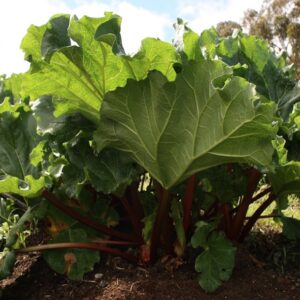
We get mordant questions all the time at Botanical Colors so why not create Mordant Monday??? Got mordanting questions? Email [email protected] YOU ASKED: I use fresh rhubarb leaf for pre-mordanting wool, and I’m wondering if it can be used dried, and if so, what is the ratio of dried leaf to WOF? KATHY ANSWERED: Since you are already using the fresh leaves, do you have a percentage or weight that you are using? If so, I would use about half as much with dried leaves and see if you like the results! YOU ASKED: Kakishibu Japanese persimmon dye is used with … Read more