MORDANT MONDAY: A Plant-Based Option For Mordanting?

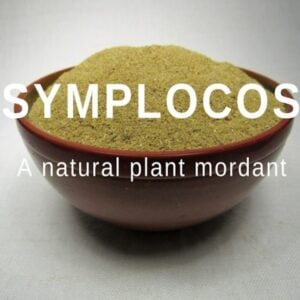
We get mordant questions all the time at Botanical Colors so why not create Mordant Monday??? Got mordanting questions? Email [email protected] YOU ASKED: I’m trying to make my natural dye practice completely plant-based, which also includes my mordant. I’ve used sumac and different nuts in the fall, tea and avocado pits, but do you sell a plant-based mordant? I still want to get great color and not all plant-based “mordants” are getting me to where I want to be. KATHY ANSWERED: We do! Symplocos is an exciting alternative that will give you the mordanting power as your base. We are … Read more

MORDANT MONDAY: How To Recharge Mordants & Assists

We get mordant questions all the time at Botanical Colors so why not create Mordant Monday??? Got mordanting questions? Email [email protected] YOU ASKED: I have mind-bending questions about the mordants that can be refreshed like aluminum acetate, aluminum sulfate and aluminum triformate. Is it different with different mordants? And what happens with the assists like soda ash or cream of tartar, if I put them together with the mordant, do I also need to recharge it as well with 25/50%? KATHY ANSWERED: Typically aluminum sulfate, aluminum potassium sulfate and aluminum acetate are refreshed at 50% and aluminum triformate is refreshed at 10%. … Read more

MORDANT MONDAY: Scouring & Mordanting Raw Silk

We get mordant questions all the time at Botanical Colors so why not create Mordant Monday??? Got mordanting questions? Email [email protected] YOU ASKED: I was wondering what is the best way to scour or mordant raw silk? I know you have on your site that info for silk but just wanted to ask if that applied the same for raw silk as well. KATHY ANSWERED: Raw silk, also referred to as silk noil, is the carded short waste pieces from silk reeling that are carded and spun before weaving or knitting. The fiber is medium weight, textured, matte and can … Read more

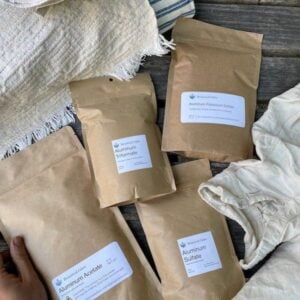
Aluminum Sulfate

MORDANT MONDAY: Penny Circles + Mordanting Wool

We get mordant questions all the time at Botanical Colors so why not create Mordant Monday??? Got mordanting questions? Email [email protected] YOU ASKED: I am looking for something to dye 100% wool. I mostly eco dye and not familiar with dyeing wool. I’d like to do several colors to make penny circles. I have a whole bolt of the wool. Can you recommend something for color and mordant? (My wool has been scoured.) KATHY ANSWERED: Since penny circles are fairly small, you have a lot of options to make some lovely color combinations. A small amount of fabric – something … Read more

MORDANT MONDAY: Mordant Making Linen Stiff

We get mordant questions all the time at Botanical Colors so why not create Mordant Monday??? Got mordanting questions? Email [email protected]. Today we look at linen! YOU ASKED: I am wondering why mordanting with alum might change the feel of the fabric? I dye linen a lot and I haven’t been able to figure out why this happens and how to restore it to its original softness! KATHY ANSWERED: If your fabric is feeling stiff after mordanting, you may be able to restore softness through a gentle tumble in a clothes dryer. If this doesn’t solve the problem, evaluate how … Read more

Pokeberry dyeing without a mordant for Mordant Monday

This Mordant Monday, I want to share a little bit about my pokeberry dye adventure this past week. Those of you who know me know that I was trained to mordant nearly everything (exception: indigo). Not mordanting something that needs a mordant usually elicits a shocked, silent, but oh-so-judgey raised eyebrow, so this post is a stretch for me. The interesting thing about pokeberries is that it’s possible to get a brilliant color by using wool yarn and white vinegar. No alum mordant is used in this technique. And vinegar is not normally considered a mordant. So here we are. … Read more

MORDANT MONDAY: Will Mordant Affect Indigo Dyeing?

We get mordant questions all the time at Botanical Colors so why not create Mordant Monday??? Got mordanting questions? Email [email protected] YOU ASKED: I use aluminum triformate as my mordant for cellulose and silk. I am planning to dye linen with weld and was told that I didn’t need to use a tannin before dyeing if using potassium triformate.If I do need to use a tannin and have already mordanted the linen, do I go back and use tannin and remordant? KATHY ANSWERED: I have concentrated on using a tannin pretreat with aluminum sulfate and haven’t done so as frequently … Read more

Mordant Monday: R U Mordant Curious?

For Mordant Monday, we answer your Mordant Questions and dive into everyone’s favorite topic: MORDANTS. Are you Mordant Curious? I received a great question about the mordants we carry. Like, you have so many. What is the difference? Does it really matter? Having a variety of mordant choices allows you as an artist to consider your materials before you start creating. For example: if you are dyeing a cellulose fabric, you can use aluminum acetate, or you can use a tannin pre-mordant and then apply aluminum sulfate as the mordant. They will give you different results. We’ve created a table … Read more

Mordant Monday: Ceriops Tagal (No Mordant Required!)

Pictured here is our drying line from our recent tour to The Threads of Life Bali. The black pieces are Ceriops overdyed in Indigo. Today, we’re taking a look at Ceriops Tagal, a “red” tannin from Indonesia, and a color that is rich in history and traditional use. We are excited to present it to you again as it was one of our favorite dyes to work with while we were at The Threads of Life Bali. At Botanical Colors, we recognize that the mangrove species is threatened due to widespread clearing of mangrove forests for timber, fish farming and … Read more

Mordant Monday: Does Indigo Damage Mordants

We get mordant questions all the time at Botanical Colors so why not create Mordant Monday??? Got mordanting questions? Email [email protected] 2 light indigo dips on mordanted silk before immersing in exhaust dye baths to make pastels YOU ASKED: My question involves the processes of indigo dyeing when combined with other plant dyes that have been mordanted with aluminum acetate. My understanding is that citric acid discharges the mordant and also neutralizes the alkalinity of indigo as a last step in finishing indigo dyed cloth. How would you go about neutralizing indigo without discharging mordant? For some processes, I am … Read more