
MORDANT MONDAY: Do I Need To Mordant When Using Liquid Tannin?

We get mordant questions all the time at Botanical Colors so why not create Mordant Monday??? Got mordanting questions? Email [email protected] YOU ASKED: I am using your liquid tannin on cotton. Beyond scouring, I was wondering if it is sufficient to use liquid tannin (on cotton t-shirts) as a mordant before using the other liquid dyes? Or, do I need to mordant cottons at all when using these liquids? Do I need to alum them as well? I have aluminum triformate currently so was thinking to use this.  KATHY ANSWERED: I hope I’m answering your question here. If you want to use Liquid … Read more
Mordant Monday: LIME GREEN

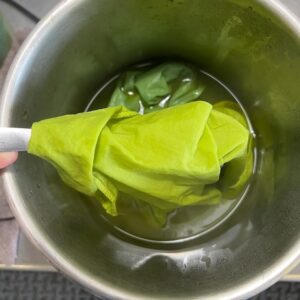
On this Saint Patrick’s Day, learn how to make this punchy lime green! We are pulling this exciting color back from our archives. Wink wink, you might remember it from this summer…Using weld and indigo, you can get awfully close to this punchy acid green. Natural dyes are often thought of as pastel or “soft” colors, but we’re here to help you make a hue that really packs a punch! This is the basic recipe Start with a mordanted cotton bandana, soak it in warm water for 30 minutes to thoroughly wet it out, and dip in a very light … Read more

How to Mordant with Tannin and Alum

Mordanting with Tannin and Aluminum Sulfate is the traditional cellulose mordant and was widely used prior to the introduction of Aluminum Acetate or Aluminum Triformate. You may use Aluminum sulfate or Aluminum potassium sulfate. Both are commonly referred to as “alum”. Our How To guides are intended to make the dye process easy, from scouring your fibers to dyeing with an assortment of dyes. You can find other How To guides here. What is Mordanting? Mordanting is the most important process of preparing fibers to accept color. Using a mordant helps to ensure the most durable and long-lasting colors. With the exception of … Read more

How to Mordant with Aluminum Acetate

Our How To guides are intended to make the mordant dye process easy, from scouring your fibers to dyeing with an assortment of dyes. You can find other How To guides here. What is Mordanting? Mordanting is the most important process of preparing fibers to accept color. Using a mordant helps to ensure the most durable and long-lasting colors. With the exception of indigo (as a vat dye, it does not require a mordant), this is not an optional step. (Check out our Q & A: Round Up of Scouring + Mordanting 101 here.) Most mordants are calculated based on … Read more

How to Mordant with Aluminum Sulfate

Our How To guides are intended to make the mordant process easy, from scouring your fibers to dyeing with an assortment of dyes. You can find other How To guides here. What is Mordanting? Mordanting is the most important process of preparing fibers to accept color. Using a mordant helps to ensure the most durable and long-lasting colors. With the exception of indigo (as a vat dye, it does not require a mordant), this is not an optional step. Mordanting provides the dyer flexibility as fibers can be mordanted in advance, dried, and dyed later, or mordanted and dyed in … Read more

How to Mordant with Aluminum Triformate

Our How To guides are intended to make the mordant process easy, from scouring your fibers to dyeing with an assortment of dyes. You can find other How To guides here. What is Mordanting? Mordanting is the most important process of preparing fibers to accept color. Using a mordant helps to ensure the most durable and long-lasting colors. With the exception of indigo (as a vat dye, it does not require a mordant), this is not an optional step. (Check out our Q & A: Round Up of Mordanting + Scouring 101 here.) Mordanting with Aluminum Triformate Aluminum triformate is a room temperature mordant for … Read more

Tannin and Alum Mordant Experiments

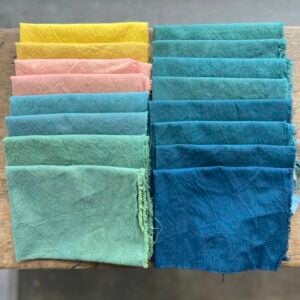
I’m obsessed with using tannin and aluminum sulfate to create different color bases for both natural dyes and indigo. What I love about this technique is that this is a great mordant option and it’s a lot of fun to see the colors develop and take on the subtle differences between the different tannin bases. This time, we’re working with a lightweight, pre-mordanted, organic cotton suitable for stitching and quilting. We mordanted 4 fat quarters, each with a different tannin, and then tried a few dye experiments using Marigold Mix, Madder extract and Indigo. Start with our Mordanted Fat quarter … Read more

Mordant Monday: Foraging Instead

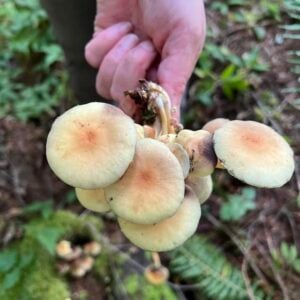
Today I was supposed to write about mordanting, but I had a foraging date to scout out potential sites for our upcoming workshop with Julie Beeler, so I headed out this morning to get a sense of what we might discover during our workshop. I am a mushroom foraging novice, and will stare for a long time at the forest floor and see absolutely nothing. I simply don’t have the eyes yet to distinguish between a brown leaf and a bolete. But to my surprise, there were some mushrooms that give color that very happily announced their presence right in … Read more

Mordant Monday: Tannin Extravaganza!

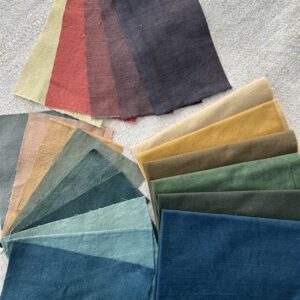
TANNIN A TIMELESS MORDANT Tannins are a bitter and astringent compound found so abundantly in many plants.  In food, they serve as the slight pucker in black coffee and tea, and the “oaky” flavor in aged wines. Tannins are used in medicine and for leather tanning.  For us, they are the natural dyer’s not-so-secret-weapon to beautiful color. For the natural colorist, tannins provide a rich base for unusual and eye-catching combinations, and they’re particularly effective on plant fibers such as cotton and linen. We have two back to back tannin workshops for you coming up in January! Build your swatch … Read more