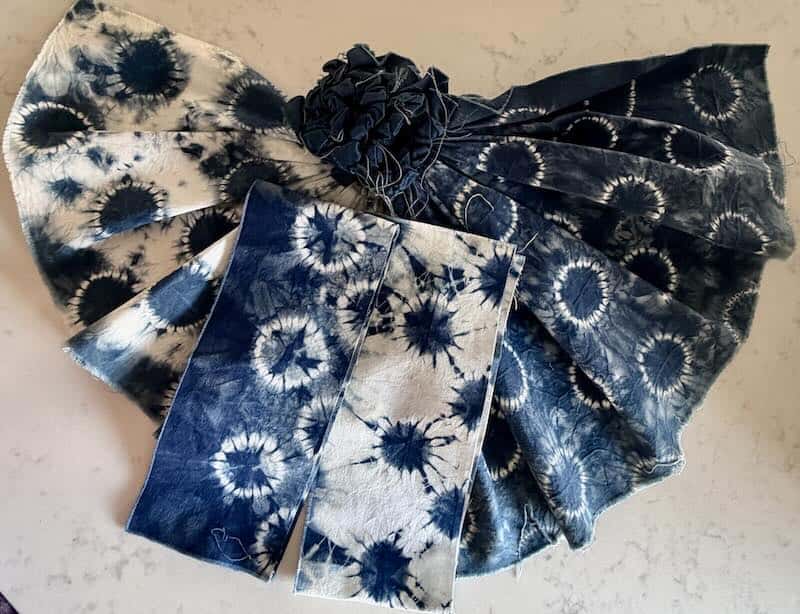
Sunday Visit welcomes shibori artist and designer Debbie Maddy of Tiori Designs, whose work has helped bridge the gap between traditional Japanese resist techniques and the contemporary quilt and surface design communities. In her upcoming workshop, Beyond the Basics of Shibori: Stitched Resist and Indigo, Debbie invites students already comfortable with indigo and introductory resists to step deeper into thoughtful stitched patterning, layered motifs, and more intentional collaboration with the vat. Over the course of the class, participants will explore complex stitched designs, refined folding strategies, and multiple dips in indigo to create richly patterned cloth that can move into garments, quilts, or simply live as cherished textiles in their own right.

For those new to your work, can you share how you first fell in love with indigo and Japanese resist traditions, and what drew you into shibori as a lifelong practice?
In 2014, I attended a one-day workshop taught by Kaari Meng, who designs French General Fabrics for Moda Fabrics. The class was very simple shibori resist with a pre-reduced indigo vat. That simple class was enough inspiration for me to fall in love with indigo blue and the magic of resisting the dye.
You’re teaching Beyond the Basics of Shibori: Stitched Resist and Indigo with us at Botanical Colors. What feels most exciting to you about going deeper into stitched resist with this group of dyers?
I am excited for these students to realize how different the stitch resist is from the fold-and-clamp techniques we all love so much. Simple running stitches with a plan gives amazing results!

This workshop focuses on stitched shibori, going past simple folds and clamps. What changes for a student when they begin to think in stitches, grids, and mapped patterns rather than quick ties and pleats?
When the students are stitching a specific design, I want them to see the results of following the design as it is mapped out, but also think about…what if I did this instead. With a fold-and-clamp design, moving a straight resist to an angle yields a new design. It is the same with stitching. By making stitches larger or moving a stitch, or even stitching on a fold, can be an amazing discovery.
You’ll be guiding students through more complex patterns and multiple ways to work with indigo. What kinds of breakthroughs do you hope they experience as they move “beyond the basics”?
I hope they learn how intricate a stitched design can be. I want them to feel like they are getting closer to the shibori from the masters. None of us will ever master shibori but we can strive to be closer.
For someone who has done introductory shibori before, what new skills or ways of seeing do you hope they’ll add to their practice in this class?
I want the students to learn the basic skills and tools of stitched shibori. What thread and needles will work best, how dipping multiple times changes the color, and how to remove stitches and finish the fabrics.
Could you paint a picture of a day in this workshop—what the room feels like, how the vats are set up, and how you like students to move between stitching, binding, and dipping?
I usually start a class by showing examples of the projects. I go over the supplies used int he class and why I like to use them. I then demonstrate how the designs are marked and how each design is stitched. I will work in groups and provide individual instruction. I want my students to feel confident in their learning. The following days will find us moving on to pulling the stitching and dyeing. Each student can move at their own pace, but I am always available to reteach any technique. The excitement will grow after the first reveal of someone’s work! That excitement is my joy!
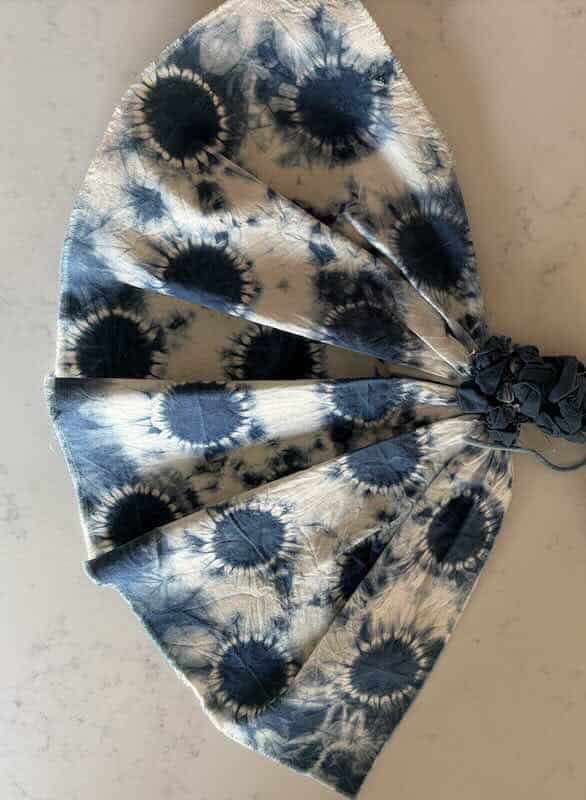
You use everything from carefully stitched resist to folded bundles and simple tools to create remarkably intricate designs. Is there a particular tool or stitched motif in this class that tends to surprise people most once it comes out of the vat?
The Hinode designs in this class will surprise the students with how the same simple stitches with different wrapping can result in a totally different outcome.
Working with indigo means collaborating with time, oxidation, and patience. How do you help students trust the process when they can’t yet see what’s happening under all those stitches and threads?
When I am demoing a design, I try to explain why the stitches are placed in a particular design. I then try to watch what they are doing and reinforce how the stitches are creating designs.
You teach in many different settings. What feels unique to you about working with the Botanical Colors community and its deep focus on plant-based color?
I am excited to be working in an environment that shares my values of natural indigo vats not synthetic dyes. The beauty and safety of natural indigo are very important to me.
Many of our students arrive with strong natural dye skills but are newer to advanced shibori. How do you like to meet that mix of experience in the room and invite everyone into a shared learning curve?
I want everyone in the group to feel welcome and excited, no matter their individual experience. I will stress how knowledge is a wonderful thing but we can all learn something new if we open our creative spirit.
When someone leaves this workshop and heads back to their own studio or kitchen vat, what do you most hope they carry with them—beyond the beautiful cloth they’ve made?
I want my students to feel confident in the new skills they have learned and how they can make them their own. They should know what tools to use and how to achieve success. I want them to know I am available if they ever feel stuck.
Shibori carries a long Japanese lineage even as it continues to evolve around the world. How do you honor those roots in your own practice while also encouraging students to develop a voice that feels authentic to them?
I want to always give full credit to my teachers who generously shared their knowledge with me so that I can share it with others. I will never be a master of shibori or indigo, but I want to share my love for the art and art of others who are masters.
You bridge hand-dyed shibori with fabric and quilt design. How does the slow, hands-on work of stitched resist inform the patterns you bring into wider production and your design life beyond the vat?
My greatest love has been teaching others, but I know not everyone wants to dye their own fabrics. Some want fabrics or garments that others have dyed to wear or use in their art.
Some people just want reproductions of hand-dyed fabrics to make art. I try to fulfill those desires by making shibori for others and by producing commercially produced shibori fabric reproductions.
Looking ahead, what is feeling alive in your shibori world right now—new stitched patterns, travel, collaborations, or future workshops you’re dreaming into?
I hope I can always feel that my art is growing as I learn from others. I want to continue to travel to amazing places to teach and learn the ins and outs of natural indigo and shibori resist. This last year, I started setting up and using fermentation vats. This year I want to make my own Sukomo vat. I always want to keep learning!