

kathy Hattori
Henna Indigo Vat Questions for FEEDBACK FRIDAY
Each week, we are emailed with questions from our natural dye community asking simple and complex questions that we thought might be worth sharing. Here are a handful from this week answered by natural dyer in chief, Kathy Hattori, Founder of Botanical Colors: After using the 1-2-3 indigo dye vat, do you need to mordant the now blue skein before you overdye with yellow to get green or madder to get purple? If you are overdyeing with a dye that does not require a mordant (like walnut hulls, for example), then you do not need to mordant after indigo dipping. … Read more

Indigo Stock Troubleshooting Questions for FEEDBACK FRIDAY
Each week, we are emailed with questions from our natural dye community asking simple and complex questions that we thought might be worth sharing. Here are a handful from this week answered by natural dyer in chief, Kathy Hattori, Founder of Botanical Colors: My indigo stock solution isn’t changing color? What should I do? If you have an indigo flower and metallic scum and you have done all the above steps and it’s still stubbornly dark, opaque blue, add 1 spoonful of calcium hydroxide, and 1 spoonful of fructose or henna, stir carefully and watch for reduction. Gently heating the … Read more
EILEEN FISHER & Botanical Colors Launch Botanical Collection
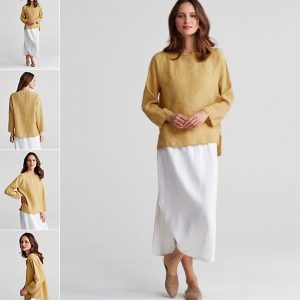
We are so excited to announce our Botanicals Collection with EILEEN FISHER! Check out our indigo, madder root, and ground pomegranate peel on EILEEN FISHER’s organic handkerchief linen here. “Embracing natural dyes means embracing nature-from its unique colorations to all its perfect imperfections. It’s really thrilling to see EILEEN FISHER surge ahead with a beautiful and natural dye offering and to have involved us in this project. We are honored,” says Kathy Hattori, founder of Botanical Colors. As part of EILEEN FISHER’s rigorous Vision 2020, the company is taking on toxic dyes, human rights as well as sustainability in an … Read more
Green on Wool Yarn with Indigo Questions for FEEDBACK FRIDAY
Each week, we are emailed with questions from our natural dye community asking simple and complex questions that we thought might be worth sharing. Here are a handful from this week answered by natural dyer in chief, Kathy Hattori, Founder of Botanical Colors: Do you have any tips on getting a crimson red on cotton from cochineal? Been trying so many different ways and can’t get the concentration to stay! The majority of the historical recipes for very deep and bright red on cotton use madder, not cochineal. Your best bet if you want the deepest shade on cotton is … Read more
VIDEO: Botanical Colors’ Founder Kathy Hattori in Cordova, Alaska
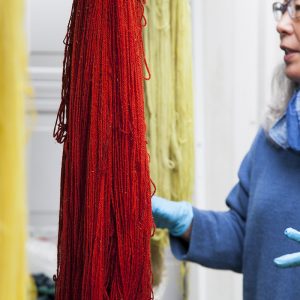
This video with Botanical Colors Founder Kathy Hattori in Cordova, Alaska looks at foraging and natural dyeing. Kathy travels to Cordova to teach a workshop on local color. In addition to foraging sustainably for natural dye plants on glaciers, Kathy and crew explored regional color through flowers, lichen and a little sprinkling of Botanical Colors’ own extracts. This video was part of the shorts program at Mountainfilm. Mountainfilm is a documentary film festival that showcases documentaries about environmental, cultural, political and social justice issues. The film festival is in Telluride, Colorado. You can learn more about our experience in Alaska … Read more

EILEEN FISHER Learning Lab Event With Botanical Colors Indigo!
Shibori is a centuries-old Japanese method of dyeing cloth by binding, stitching, folding, twisting, and compressing. In this workshop featuring all Botanical Colors indigo dyes, participants will learn these basic techniques through demonstration and hands-on application. Utilizing recycled and reclaimed materials, participants will apply these decorative techniques to create their own unique piece. Tuition is $115 and includes materials, use of all tools, coffee, tea, and light snack not to mention just being in the amazing and beautiful EILEEN FISHER Learning Lab in Irvington. RSVP on the EILEEN FISHER Learning Lab page here! Instructor Jean Wasil is a graduate of … Read more

Botanical Colors Featured on Maker’s Row for Eco-Friendly Factories
Maker’s Row is a Brooklyn-based, world respected young company that works with large corporations to first time designers, by providing unparalleled access to industry-specific factories and suppliers across the United States. We were recently interviewed for an article on “Eco-Friendly Factories: How Do You Know Your Manufacturer is Green?” The site reads: “As consumers increasingly look for transparency around the making and sourcing of the products they purchase, designers are striving to meet that need not only the conception of the product, but the manufacturing. While finding the perfect, environmentally-friendly fabric poses a challenge that’s equal parts fun and gratifying, … Read more
Natural vs. Synthetic Dyes: The (Ill-Informed) Battle Continues
Botanical Colors founder Kathy Hattori recently commented on an article titled “Mordant Madness!” on Buxton, Maine based Lana Plantae responding to a discussion about a person posting on a “social media page devoted to fiber arts,” that they were “attacked” by natural dyers at a fiber event because their wool was colored with synthetic vs. using natural dyes. Lana Plantae founder Marcia Macdonald writes: “I do suspect the word “attack” may be a little strong and used for dramatic effect. Immediately there was a long string of commentary and it was very anti- natural dye, anti-mordant and overwhelmingly these comments … Read more
This Indigo Research Could Make Blue Jeans Green
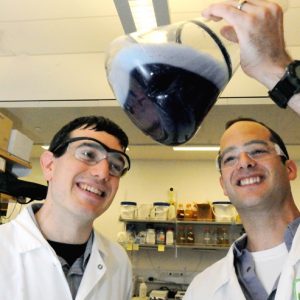
According to Phys.org, Berkeley bioengineering professor John Dueber has studied the chemical steps plants use to naturally make indigo, and he thinks he has found an environmentally green way for the industry to churn out the dye without the use of toxic compounds. “When plant leaves are healthy, a chemical precursor to indigo, called indican, is caged within a sugar molecule and isolated from the rest of the cell in an organelle. Only when leaves are damaged is indican released from this compartment. The sugar protective cage is removed, allowing a chemical change that makes indigo. Green leaves turn blue. … Read more