This week: What’s the difference between our logwood extracts and how can you piece together an indigo vat in Peru without all the tools at your fingertips? (This answer is cool.)


Want to know how to make your very own signature black natural dye? Here’s a really good black recipe from Kathy to send you into tannin and iron experiments all day…or maybe, for the rest of your life. Black with gallo tannin, iron and logwood is a historical recipe from Europe and creates a warm black. Prior to the introduction of logwood to Europe, black was achieved through multiple baths of tannin and iron, or by overdyeing with madder, weld and woad. The basic rule of thumb with this recipe is that you can dye and continue overdyeing to achieve … Read more

This week on FEEDBACK FRIDAY we had fiber and installation artist Juliette Sallin. Juliette talked about her most recent works and research about the relationship between plant, femininity and colors. Watch the video here. Follow Juliette’s work here and here. Juliette says her favorite dyes of ours are cochineal, safflower and logwood. ABOUT: Born in 1980 in Geneva, Switzerland, fiber and installation artist Juliette Sallin studied textile design at the University of Florence, new media at the HEAD Geneva and Kingston University (GB). Two-time recipient of the Swiss Ikea Foundation (2009 and 2013), Juliette has exhibited in Switzerland and Great … Read more
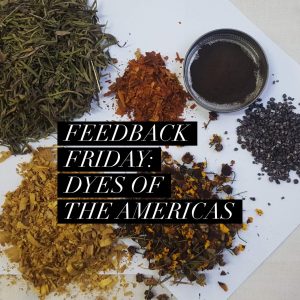
This week’s FEEDBACK FRIDAY was with Botanical Colors’ President Kathy Hattori who talked about and demoed Dyes of the Américas. We went through some native colors from North, Central and South America that are included in our new dye kit, Dyes of the Américas, as well as some locally grown specialties from our network of dye growers. Watch the video recording here: We’ve been working with some of the culturally significant and historical dyes that are native to the Americas. Many of these colors date back to ancient indigenous people, some used as early as the second century BC by … Read more
This week: What’s the difference between our logwood extracts and how can you piece together an indigo vat in Peru without all the tools at your fingertips? (This answer is cool.)
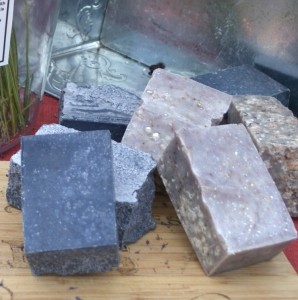

This week: Storing indigo from the colder weather, getting grays on protein fibers and indigo soap making
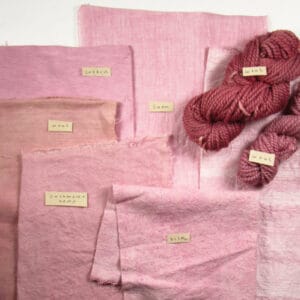

This week: Stop that excess dye from sitting on the surface of your fibers and rubbing off
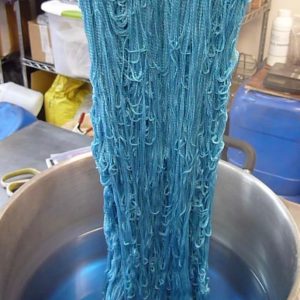
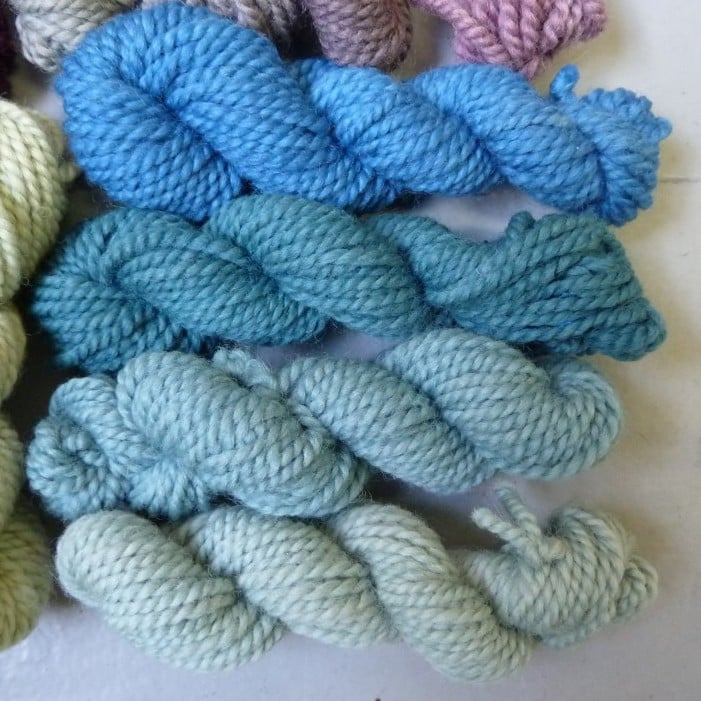
This week: Saxon Blue battles Indigo for light and washfastness and tips for getting olive green.
Botanical Colors
Seattle, WA
© Botanical colors 2026