Foraging in the Fall

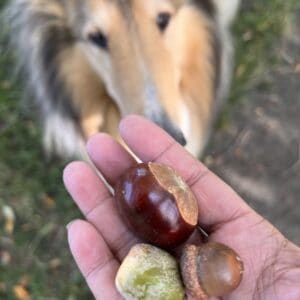
Foraging in the Fall This time of year, I am a greedy squirrel. I am constantly looking for acorns, walnuts, chestnuts, hazelnut hulls, little cones, and anything that I think might contain a tannin. Everything I find is windfall: lying on the ground and in abundance. I look for tannins that are almost completely unnoticed by the public, except possibly by other natural dyers. I wonder who else in my neighborhood is circling the same walnut tree, looking up and counting the number of bright green nuts left to fall. The number of tannins that you find is pretty amazing. … Read more
MORDANT MONDAY: What Mordant For Viscose?

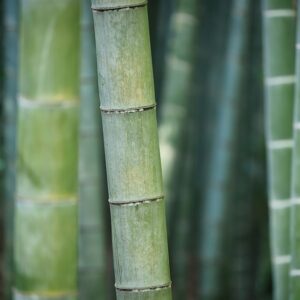
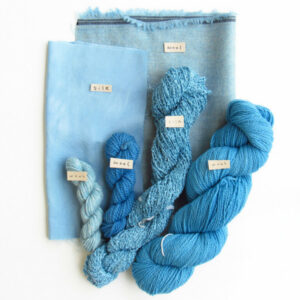
YOU ASKED: I received some organic bamboo pillowcases that I would like to bundle dye. Per their website they are crafted from 100% viscose from organically-grown bamboo. Does viscose take color? If so, what is the best mordant to use to get the most vibrant and long-lasting bundle dyeing color? KATHY ANSWERED: Natural dyes work well with viscose, which is the name typically used for fibers extruded from cellulose material, such as bamboo and wood products using a chemical process. It’s sometimes referred to as “rayon” and can contain a number of difference cellulose bases. If you are planning to bundle dye, … Read more

Aquarelle Liquid Indigo - Saxon Blue

MORDANT MONDAY: Mordant With Liquid Dye + Reusing Baths

For this Mordant Monday – We bring you a question about our Saxon Blue Liquid Indigo! YOU ASKED: Should I mordant (alum is my go to) for your liquid dye indigo? I have read that it is not a needed step but also don’t want to dye without alum and make a big mistake. Hoping you can clarify please!! KATHY ANSWERED: Thanks for your email and the question.  The liquid indigo, also called Saxon Blue, was developed in the 1700s to dye wool. We recommend that you mordant and alum is perfect prior to dyeing, and you can also add … Read more

MORDANT MONDAY: Indigo & Discharging Mordants

Mordant Monday is our Monday blog where we provide information about the most important step in natural dyeing! We were feeling the Indigo fever after Britt Boles workshop – Fresh Indigo Five ways, so we revived (no indigo pun intended) this Mordant Monday about Indigo & discharging mordants. YOU ASKED: My question involves the processes of indigo dyeing when combined with other plant dyes that have been mordanted with aluminum acetate. My understanding is that citric acid discharges the mordant and also neutralizes the alkalinity of indigo as a last step in finishing indigo dyed cloth. How would you go … Read more

MORDANT MONDAY: Weighing Fabric For Mordanting

We get mordant questions all the time at Botanical Colors so why not create Mordant Monday??? YOU ASKED: I’ve been weighing fabric before and after mordanting lately and noticed that the WOF changes slightly. For the recipes on the site, which weight is relevant for WOF? Post-scour, pre-mordant OR post-scour, post-mordant? KATHY ANSWERED: Our practice is to weigh the fabric prior to scouring and mordanting, so before we start any process on the fabrics. It is the first thing that we do so we can calculate the rest of our formulas during the dye process. YOU ASKED: I basically work 9-5 … Read more

MORDANT MONDAY: Mixing Mordants

We get mordant questions all the time at Botanical Colors so why not create Mordant Monday??? YOU ASKED: I’m just trying out your new cold mordant aluminum triformate and have mordanted wool, bamboo and cotton After applying tannin to the cellulose I dropped it into the aluminum triformate together with the wool, and the water changed to green. I guess it’s due to the connection between tannin and aluminum? But am I doing something wrong and are the textiles fine for dyeing now? I want to save the mordant bath for further use but now it has a suspicious color. … Read more

Mordant Monday with The Dogwood Dyer: Dyeing with Thanksgiving Leftovers!

We decided to bring back this incredible tutorial that Liz Spencer of the The Dogwood Dyer created for us! She knows food waste and is a master at turning what most would throw away, into things of beauty. We asked Liz Spencer, the driving force behind The Dogwood Dyer, if she could put together a how-to for us using onion skins. She came back to us with this Dyeing with Thanksgiving Leftovers: An Artful Approach to Onion Skins tutorial. If you follow Liz, you know she offers an amazing subscription called A Year In Natural Dyes. This month it’s all … Read more

Mordant Monday: Tannin Extravaganza!

TANNIN A TIMELESS MORDANT Tannins are a bitter and astringent compound found so abundantly in many plants.  In food, they serve as the slight pucker in black coffee and tea, and the “oaky” flavor in aged wines. Tannins are used in medicine and for leather tanning.  For us, they are the natural dyer’s not-so-secret-weapon to beautiful color. For the natural colorist, tannins provide a rich base for unusual and eye-catching combinations, and they’re particularly effective on plant fibers such as cotton and linen. We have two back to back tannin workshops for you coming up in January! Build your swatch … Read more

MORDANT MONDAY: Post-Mordant Scouring?

a Rerun from the archives! We get mordant questions all the time at Botanical Colors so why not create Mordant Monday??? YOU ASKED: Can you store and then reuse symplocos mordant, the way you can alum mordants? If it can be stored, do you need refrigerate it or add cloves to keep it from going off, as you must with plant based dyes? KATHY ANSWERED: Symplocos baths may be reused several times but it does contain plant matter and will probably start to ferment if left for long periods of time, like over 2 weeks in a warm environment. You … Read more

Mordant Monday: What is Dunging?

Cellulose fibers are the most common fiber that we start with as cotton fabric is readily available and affordable. However, cotton does not have the same affinity for natural dyes as protein fibers such as wool, so the cellulose mordant process is different to achieve good results. The mordant process for cellulose fibers includes pretreating with a tannin, then immersing the tannin treated fabric into an alum solution. This method is one of the earliest mordant methods for cellulose fibers and produces very good results. We use this method regularly as we also love to experiment with different tannins to … Read more