
Foraging in the Fall
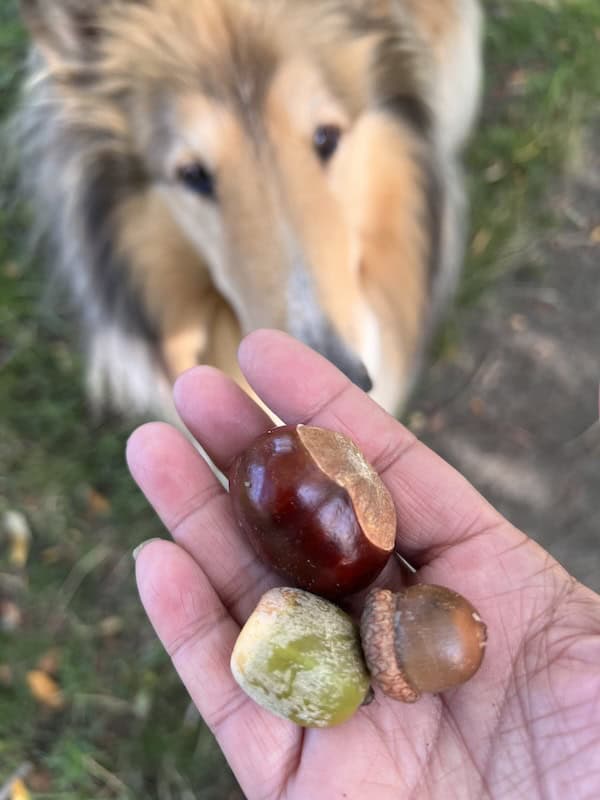
This time of year, I am a greedy squirrel. I am constantly looking for acorns, walnuts, chestnuts, hazelnut hulls, little cones, and anything that I think might contain a tannin. Everything I find is windfall: lying on the ground and in abundance. I look for tannins that are almost completely unnoticed by the public, except possibly by other natural dyers. I wonder who else in my neighborhood is circling the same walnut tree, looking up and counting the number of bright green nuts left to fall.
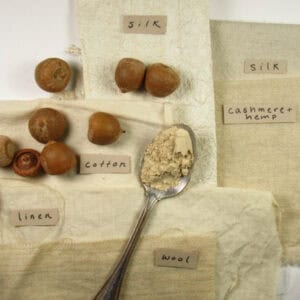
The number of tannins that you find is pretty amazing. Around our neighborhood we have acorns, chestnut-like nuts and hulls, hazelnuts, black walnut, and a multitude of cones from firs, cedar and pine. Sometimes I come across a chunk of tree bark, or some fruit tree clippings. It’s possible to collect a few of these tannin sources, grind them up, simmer them in a dye pot and make an entire range of beautiful neutrals and gray tones.
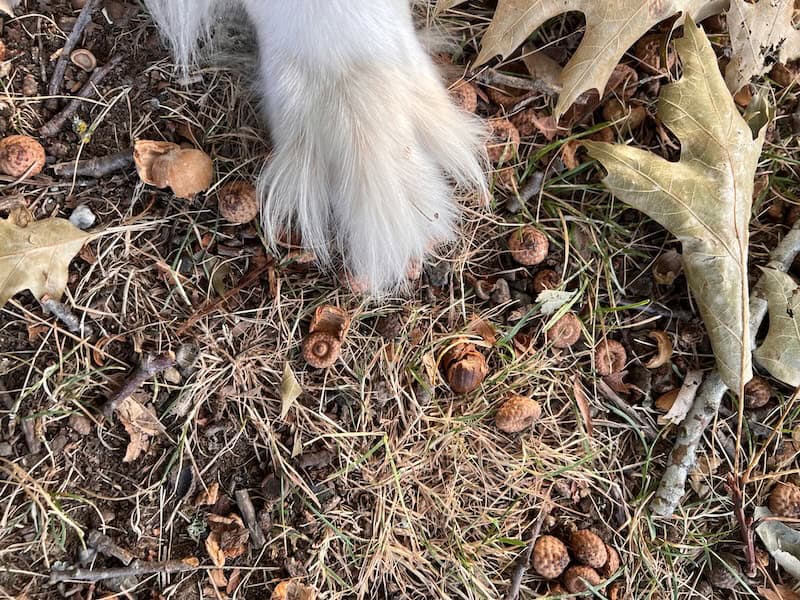
It’s best to gather before a heavy rain washes them away, so now is a good time! If you can hear squirrels in the trees, look down and start collecting. My foraging usually occurs while dog walking, which agrees with him, since that means a lot more time for sniffing. I forage in areas where there are few restrictions on picking up windfall, but be aware that some parks and open spaces forbid collecting.
Before you begin, read and follow these simple rules outlined by Sasha Duerr about responsible foraging, and being aware of safety, laws or restrictions, and best practices for harvesting from plant sources.
1. Be sure of what you are picking, as many plants have poisonous look-a-likes. Cross-reference with books and plant experts, whether they are herbalists, botanists, or other natural dyers that know their plant sources.
2. Make sure that you are foraging on allowable property, and have asked permission before picking if you want to forage on private property.
3. For the cleanest dye pots avoid foraging close to main roads, parking lots, in commercially sprayed areas (including agriculture, especially corn fields) near old houses that could be contaminated with harmful materials. You want to avoid foraging in unfamiliar lots or fields, near lawns that have been treated chemically, or downstream from factories or agribusiness that do not have sustainable practices.
4. Choose plants that appear healthy and in abundance, but leave the strongest out of respect and to encourage a future supply. Leave plants on the top of hillsides because they will seed down slope. Materials that are on the ground such as cones and nuts are usually in abundant supply, but they too are seeds and food, so leave some for the foraging animals.
5. Never gather endangered or threatened species. Many of these plants can be cultivated for medicinal use or you can research for other plants with similar properties that are not threatened. A good thing to do is to search United Plant Savers for a downloadable list of endangered and at-risk plants.
6. Harvest only 1/3 of naturalized plants or native flowers and leaves and only in abundant stands. If possible, harvest only the necessary part of the plant. It is also good to remember that digging up the root kills the whole plant.
7. Develop a relationship with the plants that you are gathering. Know the plants that grow around them, know the kind of soil they appear healthiest in, watch them mature through an entire season.
8. If you are working with introduced or invasive plants, follow best practices and local ordinances to avoid spreading seeds or spreading viable parts of the plant.
9. Harvest humbly and with gratitude!



You might also like to read: