Mordant Monday: Spotlight on Sumac

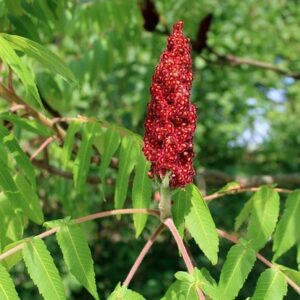
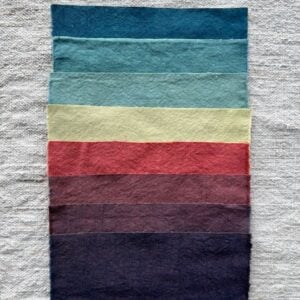
Spotlight on Sumac Taking a little time to work more closely with tannins has been incredibly interesting! This week’s tannin exploration focuses on Sumac. Sumac is from the Rhus genus and its scientific name is Rhus coriaria. It’s native to southern Europe and western Asia where it is commonly known as Tanner’s Sumac or Sicilian Sumac. We are fortunate to have number of North American native sumac including Rhus glaubra, sometimes called Smooth Sumac, and Rhus typhina or Staghorn Sumac, known for its dramatic bright red berry clusters. The staghorn berries were used by indigenous people as a tea, and … Read more
Mordant Monday: Walnut, Madder, Iron and Indigo

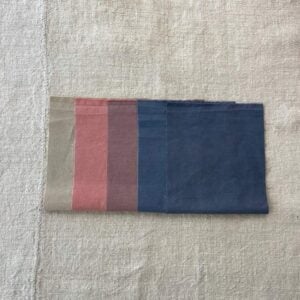
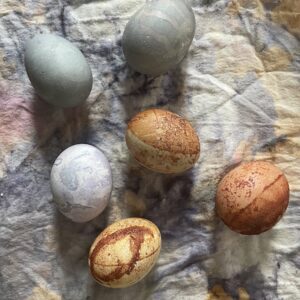
Black Walnut Juglans nigra is one of our most interesting tannins and it’s a color that’s native to the North American continent. The entire tree contains color but it is in the green hulls that we find a strong concentration of dark tannins yield light beige to golden brown on cellulose. On wool, black walnut really shines and makes a rich brown shade. Walnut Hull Powder from black walnut (Juglans nigra) is a common source of brown dye throughout North America. The fleshy hulls are full of tannin, juglone and other pigments and are the primary source of the dye. … Read more

Annatto & Hibiscus Dyed Easter Eggs

Everyone from kids to adults love to get their hands messy when they dye Easter eggs with natural dyes. This is a fun tutorial for adults and kiddos (parents help, please) to make a little Easter magic. First things first, let’s talk about health & safety: We always recommend working in a very well ventilated area. Although natural dyes are non-toxic, when using fine powders it’s best to wear a mask, and keep the windows open. Be mindful around little ones and pets as you don’t want anything going in mouths that shouldn’t be there. Also, when beginning to set … Read more

You Asked, Kathy Answered: How To Make Green

YOU ASKED: I’m having a wonderful time with your dye kit that I purchased and will always be back for more supplies, My question is what can I use to get a green color, on wool, silk or cotton? Any suggestions would be greatly appreciated! KATHY ANSWERED: Have you tried our Chlorophyllin yet? You can also use this logwood + weld recipe! We also have this video on how to make it! Just search for “green” on our site and you’ll find lots of info 🙂

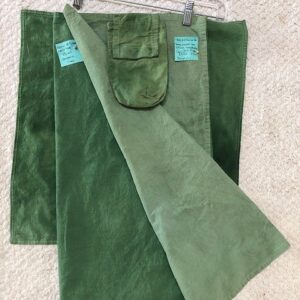
You Asked, Kathy Answered: Chlorophyllin Dye Blanket

YOU ASKED: I followed your natural dyeing instructions, on 3 different cotton fabrics, with two different mordant methods. The fabric soaked for over 48 hours in a 10% WOF. This photo is after the first wash and dry. I am very happy with the results. Any ideas the strength of WOF to use as a dye blanket? KATHY ANSWERED: That’s a very impressive array of color that you were able to achieve!  Thank you for sending them!  For the weight of fiber, on the dye blanket, I’d start with 10% as that’s what you were using to get these great … Read more

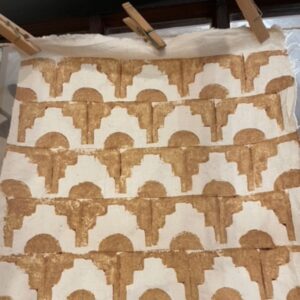
Easy Print Paste Thickener Tutorial

Designs and prints come to life with mordant printing using Botanical Colors Print Paste Thickener and this tutorial! If you don’t follow Arielle Toelke, Designer + Creator of Four Rabbit, you’re missing out! With a background in art, Arielle creates a line of goods that are both graphic and fun. We’ve been friends with her for years and also gotten to know her as one of our customers using our dyes and assists to make some pretty exciting, graphically pleasing surface designs. We asked Arielle to write an easy-to-use print paste thickener tutorial, sent her some of our print paste … Read more

MORDANT MONDAY: Will Mordant Affect Indigo Dyeing?

We get mordant questions all the time at Botanical Colors so why not create Mordant Monday??? Got mordanting questions? Email [email protected] YOU ASKED: I use aluminum triformate as my mordant for cellulose and silk. I am planning to dye linen with weld and was told that I didn’t need to use a tannin before dyeing if using potassium triformate.If I do need to use a tannin and have already mordanted the linen, do I go back and use tannin and remordant? KATHY ANSWERED: I have concentrated on using a tannin pretreat with aluminum sulfate and haven’t done so as frequently … Read more

MORDANT MONDAY: Using Alum Sulfate For Plant & Protein Fibers?

We get mordant questions all the time at Botanical Colors so why not create Mordant Monday??? Got mordanting questions? Email [email protected] YOU ASKED: I’m confused about the different types of aluminum mordants. I want to do some dyeing of fabric (silk, cotton) and also some wool. Do I need to use different aluminum mordants for these different fibers? I was told that I needed aluminum acetate for plant fibers and aluminum sulfate for protein fibers. Is that true? I have alum sulfate and would love to use it for both if that is workable. KATHY ANSWERED: Mordanting provides lots of … Read more

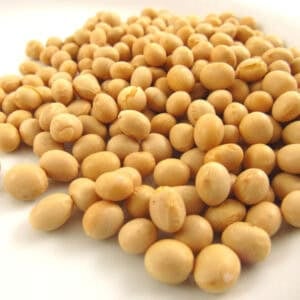
Organic Soybeans

MORDANT MONDAY: Is Soy Binder In The Whole Plant?

We get mordant questions all the time at Botanical Colors so why not create Mordant Monday??? Got mordanting questions? Email [email protected] YOU ASKED: I am growing soybeans to make soy milk to use as a binding agent and am wondering if it’s possible that the entire plant contains the necessary proteins, or if it’s solely in the beans? KATHY ANSWERED: If you do a search on soybean leaves and protein, a lot of information comes up. It appears as if the leaves contain protein but I don’t have the training to translate how much protein and what quality it is … Read more

MORDANT MONDAY: Exhausted Mordant Baths + Sumac Tannin

We get mordant questions all the time at Botanical Colors so why not create Mordant Monday??? Got mordanting questions? Email [email protected] YOU ASKED: After watching your video about aluminum triformate I decided to order it and started using it. I work with large quantities and large pieces, so I prepared a bucket with 50 liters of water and 500 grams of aluminum triformate. I used it to mordant approximately 5 kg of yarn/pieces. The water was white at the beginning, I suppose because I just mixed the powder, but after the first load, it was just like regular water. I … Read more