
Safe Use of Mordants Questions for FEEDBACK FRIDAY
This week: How to keep madder “fast” and is alum toxic?
This week: How to keep madder “fast” and is alum toxic?

It’s winter, and many of us have taken up knitting and crocheting during the cooler weather. While I’m thinking about knitting, my mind wanders to mordanting (of course), and some of the questions we’ve received from curious dyers. This Mordant Monday, I thought I’d start with some common questions when mordanting changes the hand feel and quality of wool fibers. The natural dye process uses a lot of heat, and a fair amount of handling: stirring, squeezing, rinsing. It’s easy for wool to react to all of this and become rougher feeling, even felted! Check out this week’s Mordant … Read more
Medieval Oak Gall Ink Recipe Oak gall ink, also known as iron gall ink, is one of the oldest writing inks in the Western world, used in manuscripts, letters, and botanical drawings for centuries. In this Mordant Monday, we’re exploring a simple medieval‑style recipe you can make at home with our gallo tannin, oak galls or ground oak galls. Ingredients Instructions Usage and Safety Notes A Historical Note Medieval scribes relied on oak gall ink for everything from illuminated manuscripts to everyday records, valuing its permanence, intensity, and resistance to fading. By working with oak gall powder and gallo tannin, … Read more
We get mordant questions all the time at Botanical Colors so why not create Mordant Monday??? Got mordanting questions? Email [email protected] What is Mordanting? Mordanting is the most important process of preparing fibers to accept color. Using a mordant helps to ensure the most durable and long-lasting colors. With the exception of indigo (as a vat dye, it does not require a mordant), this is not an optional step. However, there are many different mordants you can use. Deciding which mordant to use comes down to the types of fibers you want to dye and how much time or energy … Read more
We get mordant questions all the time at Botanical Colors so why not create Mordant Monday??? Got mordanting questions? Email [email protected] YOU ASKED: I have just recently tried Alum triformate, first time using it. Have you had reports that it shifts the colors? We used Sequoia extract that was purchased from Maiwa, and it should have a dusty brownish purple, and it did on the regular alum mordanted bits I had in there- but it made a greenish grey on the triformate. Just wondering if you had info on this? I’m going to do a test with 2 skeins in … Read more
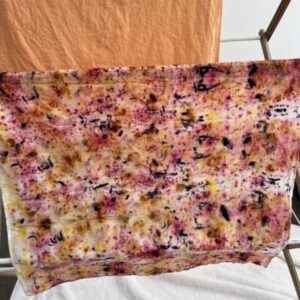
We get mordant questions all the time at Botanical Colors so why not create Mordant Monday??? Got mordanting questions? Email [email protected] YOU ASKED: I teach kids paper making and am starting an eco print enrichment this week. We are using cotton fabric. I bought alum at the grocery store thinking it was all I needed to soak the fabrics and have them bond with the flower dye, but as I read more into the topic I only find myself more confused at the minute differences. I just want the pigment from the flower petals to bond with the fiber for learning … Read more
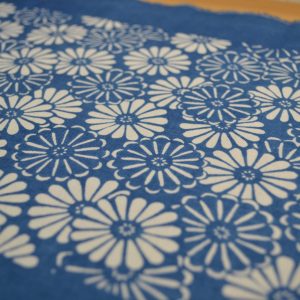
This week: mordants mixed with print paste thickeners and what’s up with lac dyes and citric acid?
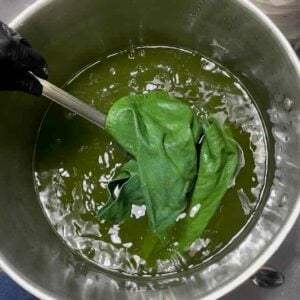
We receive a lot of questions about our favorite subject of natural dyes and two questions that I thought might be interesting to share are: – How do I dye jute or burlap? – How do I dye green? We detail information from each question and there are lots of links with how-to and recipes for further exploration! DYEING WITH JUTE Jute is a fiber from the Corchorus plant, and the largest global jute-producing region is West Bengal, India, and Bangladesh. Jute is an annual plant, rapid-growing, and produces long fibers in its stalk, similar to linen and hemp. The … Read more

I’m at the airport after teaching for 5 days at Sanborn Mills Farm in New Hampshire. Sanborn Mills Farm is a working organic farm and craft school specializing in traditional crafts such as blacksmithing, woodworking, basketry, kitchen and textile arts. We saw newborn lambs, massive draft horses and oxen and dormant grain fields just starting their spring activity. Sanborn Mills Farm is one of my favorite places to teach with a dye garden a few steps away and trails and farm animals to visit and observe. The weather was typical unsettled early spring and we encountered high winds, heavy rain, … Read more
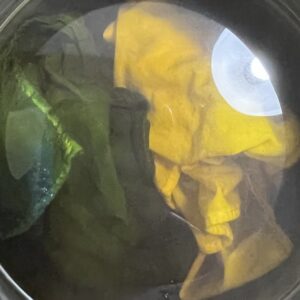
Indigo first, or indigo second? We get mordant questions all the time at Botanical Colors so why not create Mordant Monday??? Got mordanting questions? Email [email protected] YOU ASKED: Do you always dye indigo first before overdyeing with another color? Does it make any difference? KATHY ANSWERED: When I was starting out, I was advised to dye with indigo first, rinse, mordant my fabric, and then dye with a mordant color second in order to create any type of compound color when indigo is involved. We largely agree with this as most of our production colors start with an indigo shade … Read more
Botanical Colors
Seattle, WA
© Botanical colors 2026