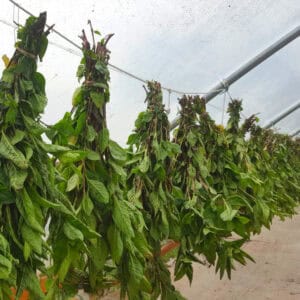
Shelf Life of Mordants Questions for FEEDBACK FRIDAY
This week: What’s the shelf life of mordants and is cold indigo leaf dyeing stronger or weaker than hot?

This week: What’s the shelf life of mordants and is cold indigo leaf dyeing stronger or weaker than hot?
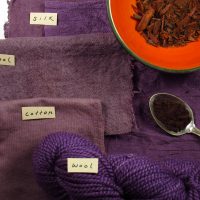
This week: Storing mordanted wool and getting logwood’s rich purple to stay.
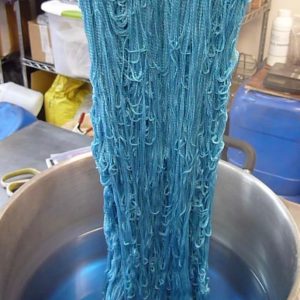
This week: Can you make big batches of iron mordant to store and how to get a light teal with our dyes.

This week: Expanding color profiles with Symplocos and “aluminum potassium sulfate?”
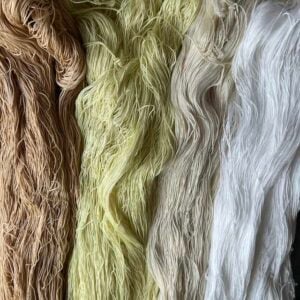
Mordanted Sashiko Thread with Different Tannin Options! Now you have the convenience of using tannins and a pre-mordanted thread to create your own color palettes and who doesn’t love that? Pictured from Left to Right: Cutch and Alum mordant, Sumac and Alum mordant, Gallo-Tannin and Alum mordant, and PFD, unmordanted Sashiko Threads We’ve been busy adding to our very popular mordanted product line, and will be offering mordanted Sashiko threads using three different mordant variables. The light brown color is Cutch, a light brown tannin, the yellow is Sumac, a yellow-based tannin, the light cream is Gallo-Tannin, a “clear” tannin, … Read more
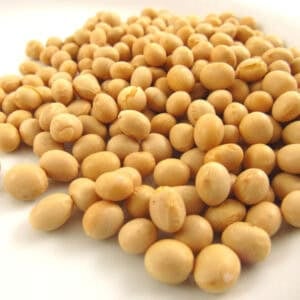
We get mordant questions all the time at Botanical Colors so why not create Mordant Monday??? Got mordanting questions? Email [email protected] YOU ASKED: I am growing soybeans to make soy milk to use as a binding agent and am wondering if it’s possible that the entire plant contains the necessary proteins, or if it’s solely in the beans? KATHY ANSWERED: If you do a search on soybean leaves and protein, a lot of information comes up. It appears as if the leaves contain protein but I don’t have the training to translate how much protein and what quality it is … Read more
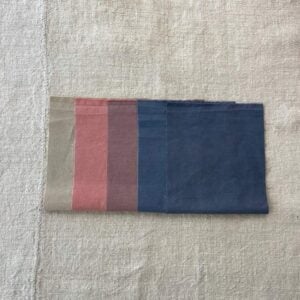
Black Walnut Juglans nigra is one of our most interesting tannins and it’s a color that’s native to the North American continent. The entire tree contains color but it is in the green hulls that we find a strong concentration of dark tannins yield light beige to golden brown on cellulose. On wool, black walnut really shines and makes a rich brown shade. Walnut Hull Powder from black walnut (Juglans nigra) is a common source of brown dye throughout North America. The fleshy hulls are full of tannin, juglone and other pigments and are the primary source of the dye. … Read more
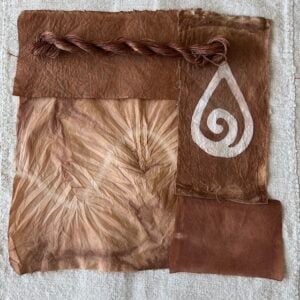
Kakishibu samples clockwise from top: paste resist by Kentaro Kojima, silk, cotton sashiko thread, cotton with iron, soda ash and kakishibu alone. Kakishibu Dye (Persimmon Tannin) Natural dyes are fascinating because we can see the history of human curiosity and imagination as it interacts with the natural world. Like, who looked at a hard, green, horribly astringent, inedible persimmon fruit and thought “You know, there’s probably an amazing, insect-repelling, anti-microbial, water-resistant, beautiful color in there if I just ferment it for a couple of years with a slice of eggplant.” Who, exactly? Whoever that clever person was, we have them … Read more
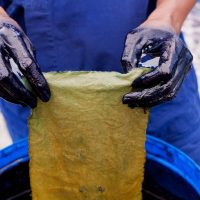
This week: Urine vats, keeping your indigo vat alive and can you fix color with sea salt?
Each week, we are emailed with questions from our natural dye community asking simple and complex questions that we thought might be worth sharing. Here are a handful from this week answered by natural dyer in chief, Kathy Hattori, Founder of Botanical Colors: Is there any way to remove iron from fabric to brighten it up? Iron is a reliably “permanent” mordant, which is why it is used to enhance light and “washfastness” with dyes that are weak in these categories. I have not seen a reversible method for removing iron. I keep getting mixed answers from people about dyeing … Read more
Botanical Colors
Seattle, WA
© Botanical colors 2026