A Pantone Inspired Airbnb Fit For Color Enthusiasts

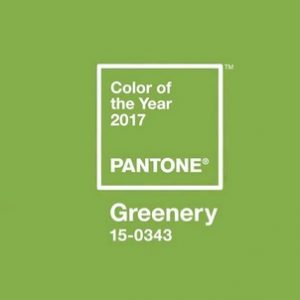
We haven’t acknowledged the Pantone color of the year enough so we’re glad to see others who are and in the most fun of applications. Stay tuned for a natural dye recipe we’ll be creating soon where you can achieve this color for your own design projects. According to Dezeen, “Pantone has collaborated with Airbnb to fill a London home with planting and projects that match its verdant 2017 colour of the year. “Pantone had announced the tone which it describes as a “tangy yellow-green”, as its pick for colour of the year in Decembe 2016. The annual selection is … Read more

Thanksgiving Day Natural Dyeing With Food Waste

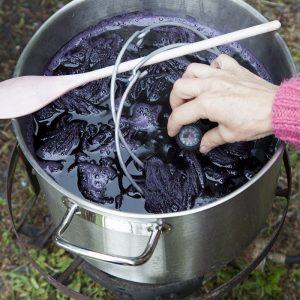
Image: Vogue This Thanksgiving Day, why not do what you love and natural dye with food waste while you cook up your mid-day feast? According to Vogue, “With so many color-rich foods on most Thanksgiving menus, Vogue.com decided to get a lesson in natural food coloring, and create a set of eco-chic napkins that can be made in tandem with the holiday meal. As it turns out, the palette procured from turkey-day cuisine is very seventies: Cranberries produce a range of colors from poppy to dusty rose, onion skins tone silk lime and ochre, beet stalks boil into muted moss, … Read more

VIDEO: An Exploration of Place and Natural Dyes, Cordova Alaska

VIDEO: An Exploration of Place and Natural Dyes, Cordova Alaska Paul Gaugin was once quoted as saying “Color! What a deep and mysterious language, the language of dreams.” It’s true. Those who stop to marvel at the color all around them easily see the mysteries- looking deeply into the crashing roll of a wave, the veins on a leaf, the back of a beetle tooling slowly across the yard…nature is always busy showing off. As a sustainable fashion writer and lover of natural dyes (thanks in big part to Botanical Colors), I too am in awe of how natural dyes … Read more

A Closer Look at the History of Cochineal

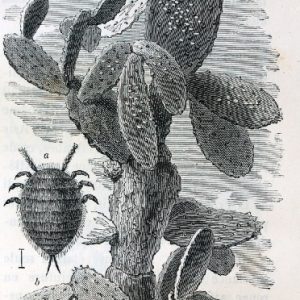
According to The Advocate, “The prickly pear cactus was a scourge in outback regions of Australia until the Cactoblastus moth was introduced in 1926 as a biological method to eradicate this introduced plant pest. A consignment of 3,000 Cactoblastus moth eggs reproduced and the next generation numbered in excess of two and a half million eggs.  These were distributed to selected areas from which eggs were gathered and scattered over an increasing area until about 300 million moth eggs had been successfully translocated. By 1932 most of the infested country had been reduced to soggy masses of decaying yellow pulp and by 1934 the cactus had been brought under control. This cactus was first introduced into Australia in the early … Read more

Designer Vu Thao Shares Vietnamese Natural Dye Secrets

According to The Creator’s Project, “Few visitors set foot in Cao Bang, Vietnam, a remote village in the mountains north of Hanoi, but designer Vu Thao considers it a creative second home. Collaborating with ethnic women who live there, Thao grows and produces natural dyes and fabrics for Kilomet 109, her eco-conscious clothing line. Thanks to Vacation With An Artist (VAWAA), a program we covered previously that pairs travelers with creators around the world, curious visitors can join Thao in Cao Bang to spend five days learning the secrets of cultivating natural dye from the land. Craftsmanship is deeply ingrained … Read more

5 Things About Natural Dye Production Vs. Synthetic

We’ve learned a lot over 12 years doing natural dye production for fashion brands so we’ve put together “5 Things About Natural Dye Production Vs. Synthetic .” Sustainable design often means a concerted effort to really dig into the details of one’s supply chain but the number of variables to track can be truly overwhelming. One point that is often overlooked in the fashion industry is how fabrics are dyed and treated. In fact, for many designers, there is a fundamental disconnect when sourcing dyed and finished fabrics, even “organic” materials as the information on treatments and finishes are minimal and … Read more

8 Frequently Asked Questions About Natural Colors and Dyes

We get asked so many questions about natural dyes that we put together 8 of our most frequently asked questions! What are natural dyes? Natural dyes are textile colorants that are derived from plants, insects and other natural materials. They are steeped in history, mystery and lore and each culture has its own set of prized colors, traditions and meanings. Prior to the mid-19th century, all dyes were from the natural world. Blue came from indigo, yellow from a variety of plants, including fustic, mignonette and dyers’ greenwood, red from madder roots and cochineal insects, purple from logwood and brown … Read more

VIDEO: An Old Sweater, A New Lease on Life with Natural Dyes

There are so many ways of giving your clothing a whole new life instead of sending them to the landfill. Natural dyes are just one of many ideas so we can’t help but love this “Haulternative” video by Leotie Lovely by photographer/videographer, Monique Pantel from Pantel Photo featuring La Manufacture Onirique and Sencha & Bourbon. How they help give an old favorite sweater a new lease on life with fresh color is wonderful. Leotie Lovely made the video below as part of her support of Fashion Revolution’s week of #Haulternatives. She says on her blog that she wanted to transform … Read more

On Makers Row: Eco-Friendly Factories: How Do You Know Your Manufacturer Is Green?

Check out our guest post on Makers Row! As consumers increasingly look for transparency around the making and sourcing of the products they purchase, designers are striving to meet that need not only the conception of the product, but the manufacturing. While finding the perfect, environmentally-friendly fabric poses a challenge that’s equal parts fun and gratifying, locating a factory that adheres to sustainable practices can prove more daunting. So what are the key things you need to know when identifying the factory that keeps your production process green? We spoke to Kathy Hattori of natural dye studio Botanical Colors, a … Read more