
Confused About Cochineal? Ask Kathy!

We get so many questions about cochineal, from techniques to color fastness to “what does it smell like?” The questions are frequent so we’re hoping many of you will send them in so Kathy can properly answer and give you some help! Today’s question came in from one of our favorite textile artists, Abigail Doan of Lost in Fiber. Abigail: I was recently chatting with my textile artist mother over Labor Day weekend about recent natural dye experiments she has been doing, and she shared that the color that she has yielded from cochineal dye has often varied. I know … Read more
Dyeing For Dummies: The Wonders of Cochineal

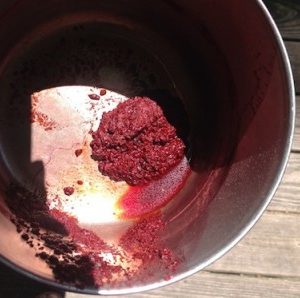
Like I’ve said before, working for a natural dye guru like Kathy Hattori can give one an inferiority complex. I hate inferiority complexes for me or anyone else, so when feeling less than, I say take on the thing that most scares you (unless it’s skiing). In this particular case, I accepted the challenge of cochineal and a Tussah Silk Gauze Shawl that is also on the Botanical Colors site. In the instructions that Kathy gave me, it said to use a coffee grinder or spice mill to grind up 1 tablespoon of whole cochineal (for a dark red which … Read more

Madison Wool and Wildwood Farm Host a Natural Dye Weekend

We had so much fun this past weekend in Madison, Connecticut at Madison Wool and Wildwood Farm’s natural dye weekend! Participants had their own personal natural dye journeys using both the classical, historical dyes and some surprising new ones (think walnut sludge and pokeberries).  We also worked with some of Botanical  Colors’ ancient raw dyestuffs such as cochineal, madder roots, walnut hulls and weld flowers. The group also learned about the secrets to obtaining the best color through chopping, simmering and carefully extracting natural dye tinctures.  As an added bonus, we took a step outdoors to gather dyestuffs from the … Read more

A Perfect Red: A Story of Cochineal

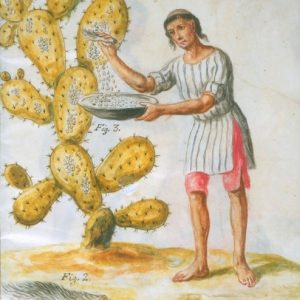
A Perfect Red is a marvelous story about the history of the “discovery” of cochineal by Europe in the 16th century. The tiny  scale insect is one of the most compelling red colors in the natural dye palette and its introduction took Europe by a storm, garnering huge fortunes for Spain and England (who pirated tons of cochineal bounty from Spain).  Author Amy Butler Greenfield details the challenges that it took to bring this dyestuff to market from the fall of the Aztec empire to Perkin’s discovery of mauve.  Her 300-page book reads like a natural dye bodice-ripping historical romance … Read more